Aft Deck Restoration
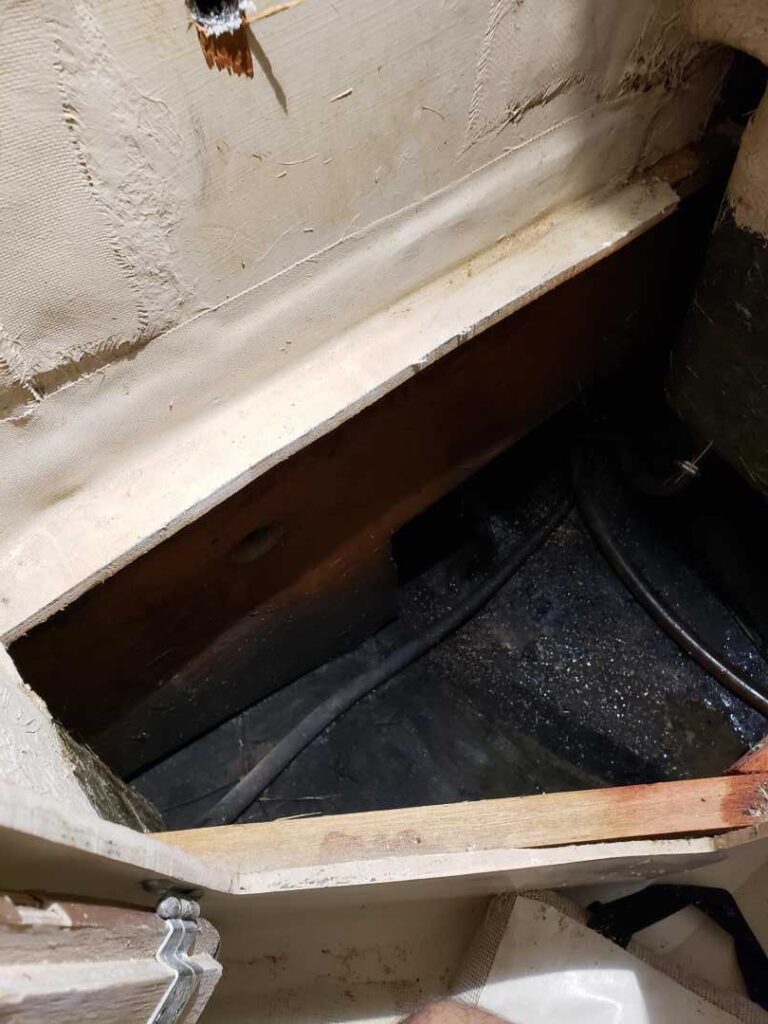
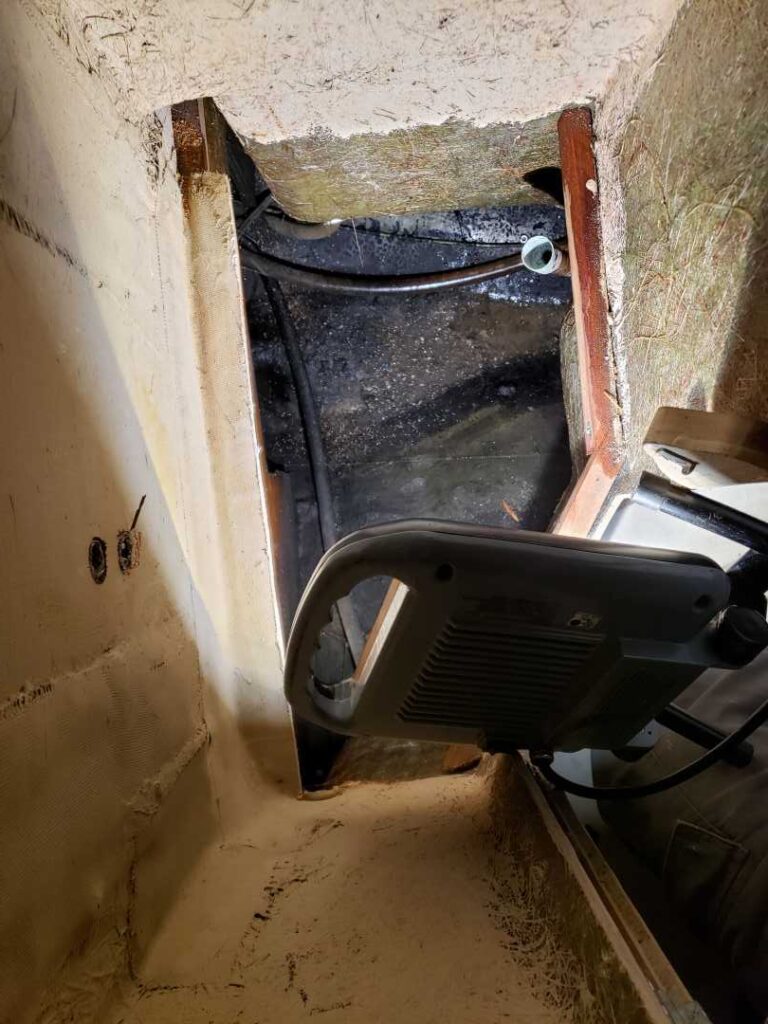
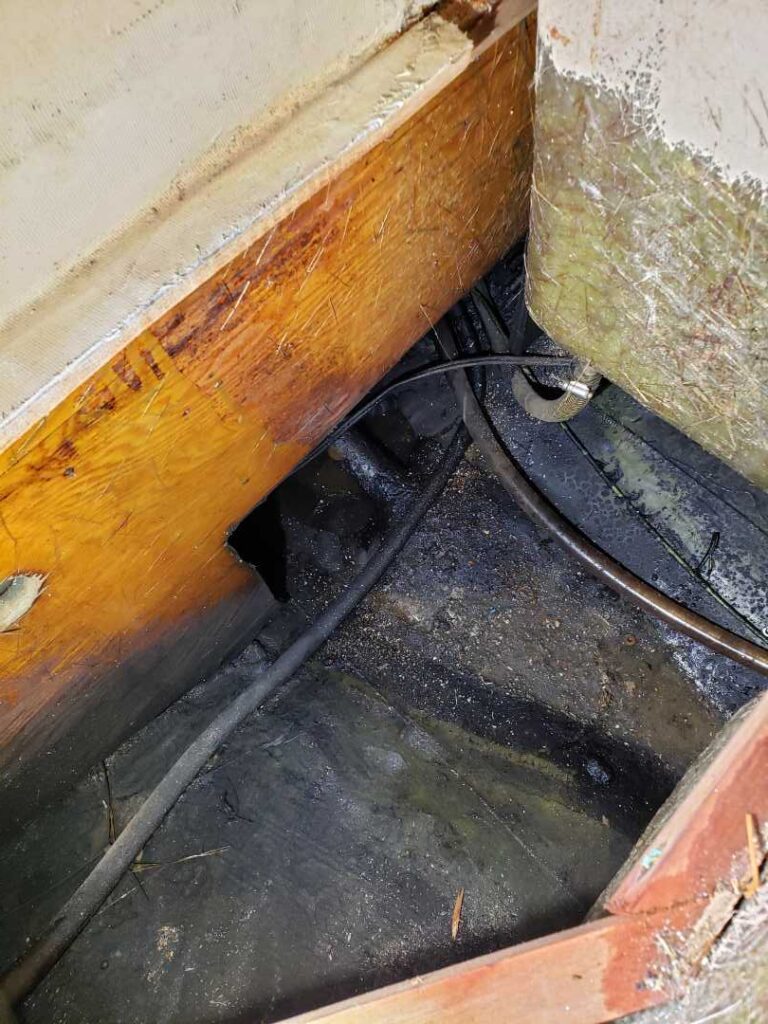
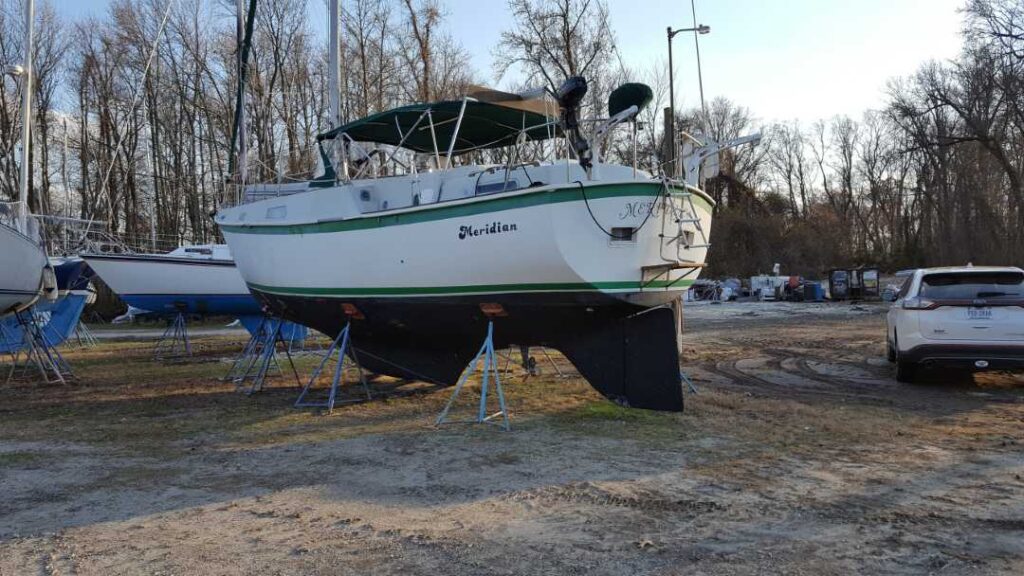
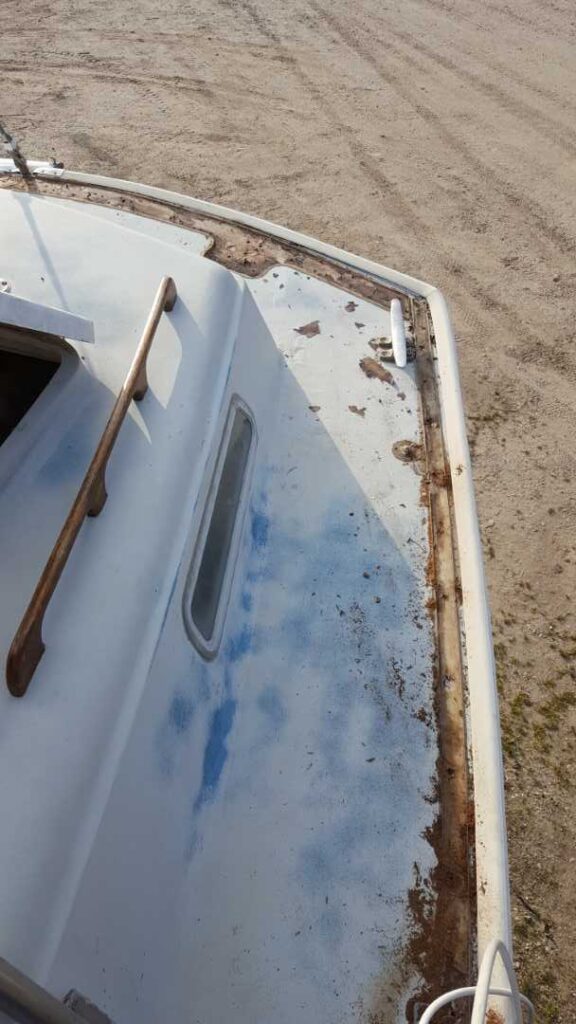
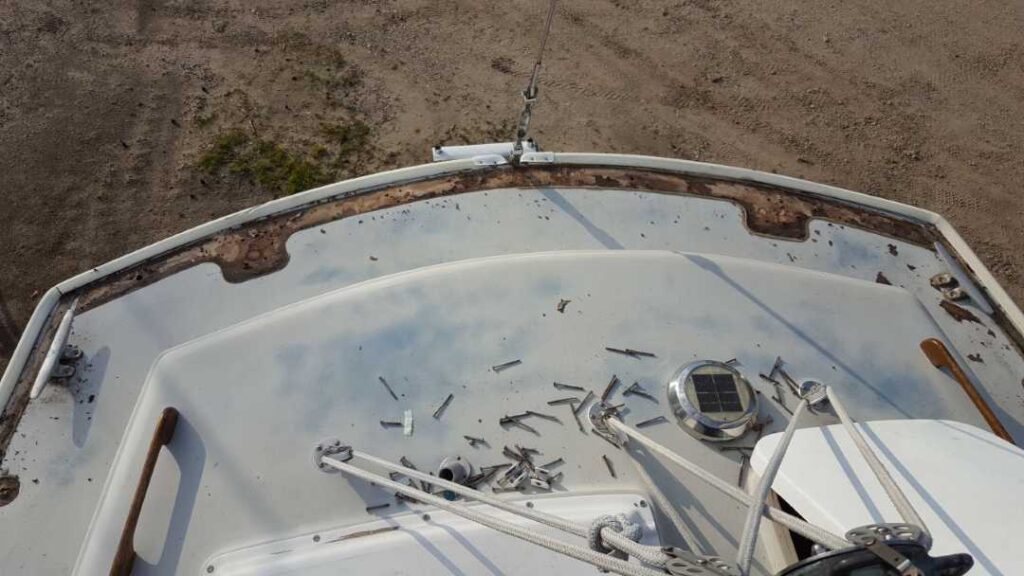
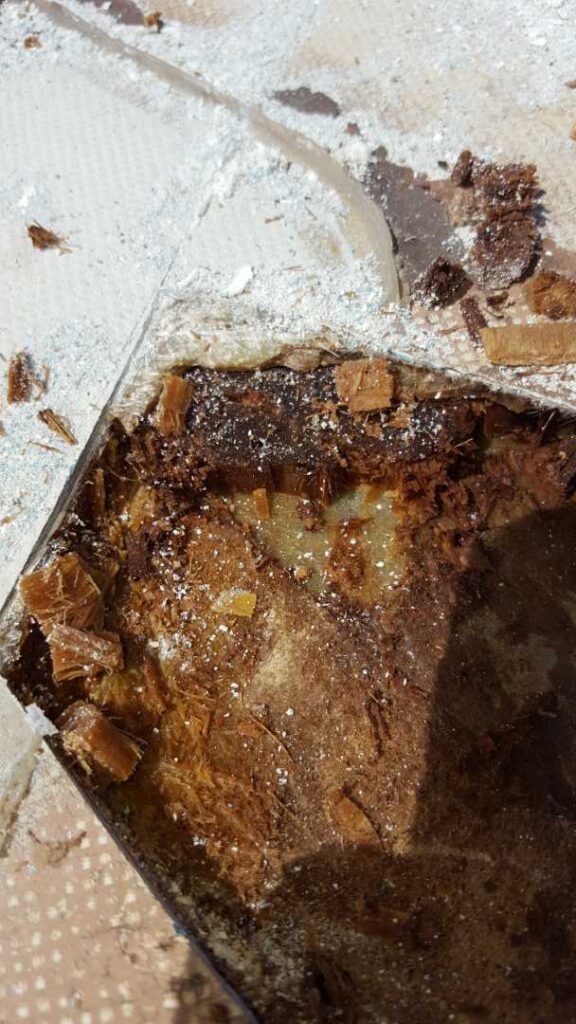
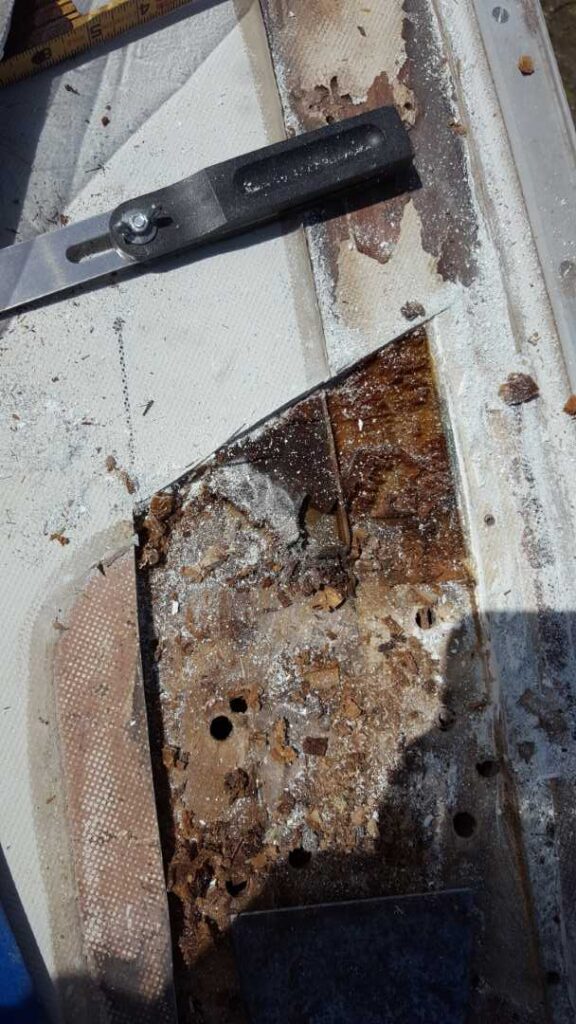
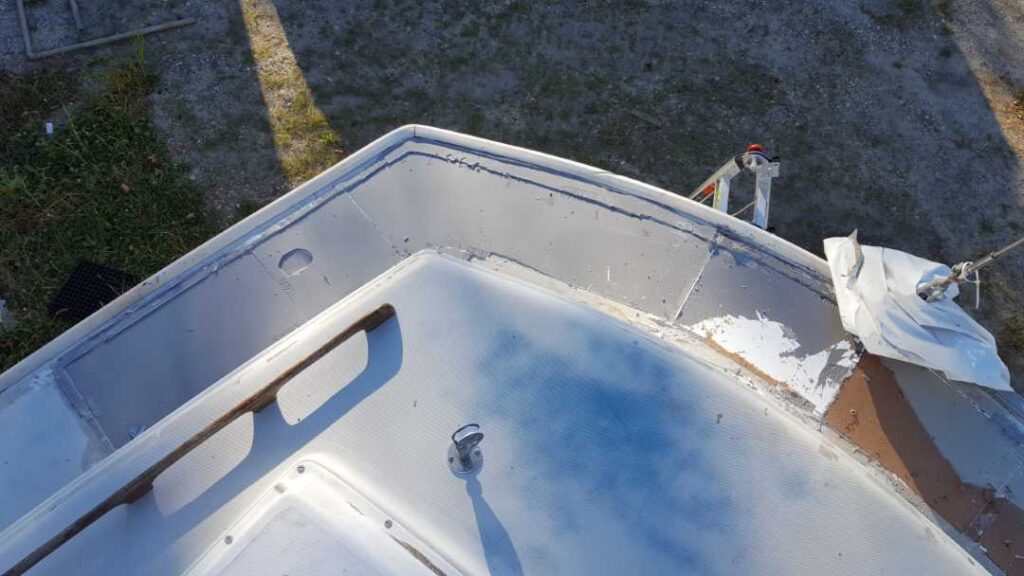
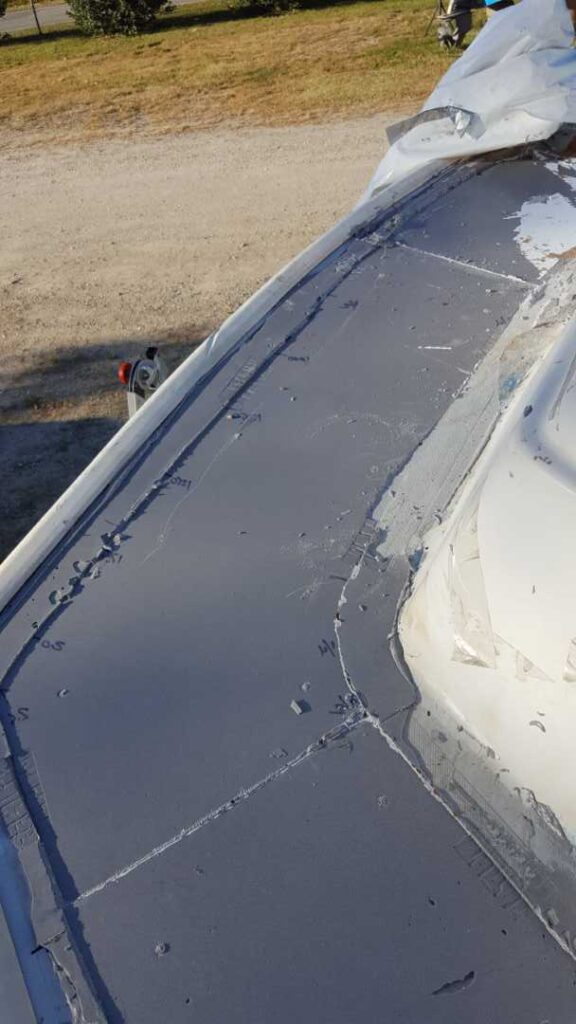
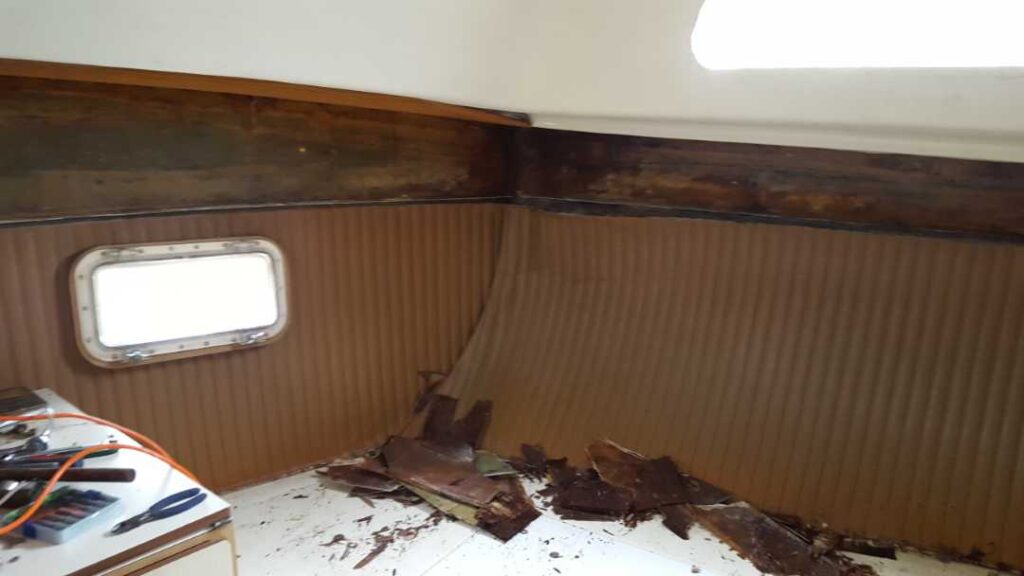
One of the previous owners had installed dinghy davits and, in the process, compromised the aft deck. As many of you know, most vintage fiberglass boats have balsa wood cores for strength and reduced weight. Balsa, when exposed to water for a prolonged period, deteriorates into something resembling papier-mâché. There was evidence of this on the shelves in the aft cabin when we bought her. While I slowed the progress, over time it became evident that we had to repair it.
My original goal was to pump some substance (unknown to me at the time what) into the cavity between the deck and inner hull from below. This would allow me to avoid cutting the deck out. I pondered this for years but finally concluded that cutting the deck out was the best option.
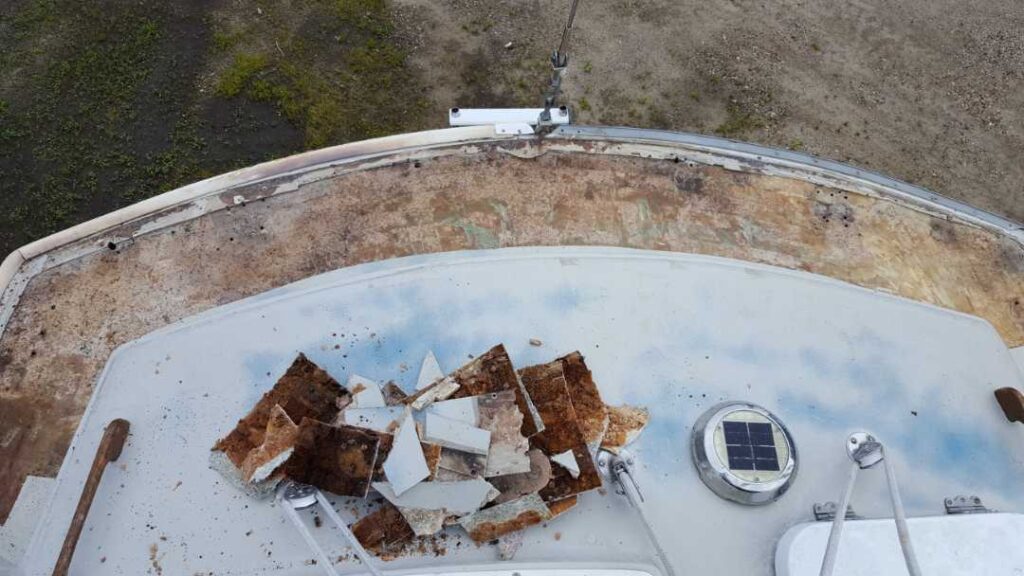
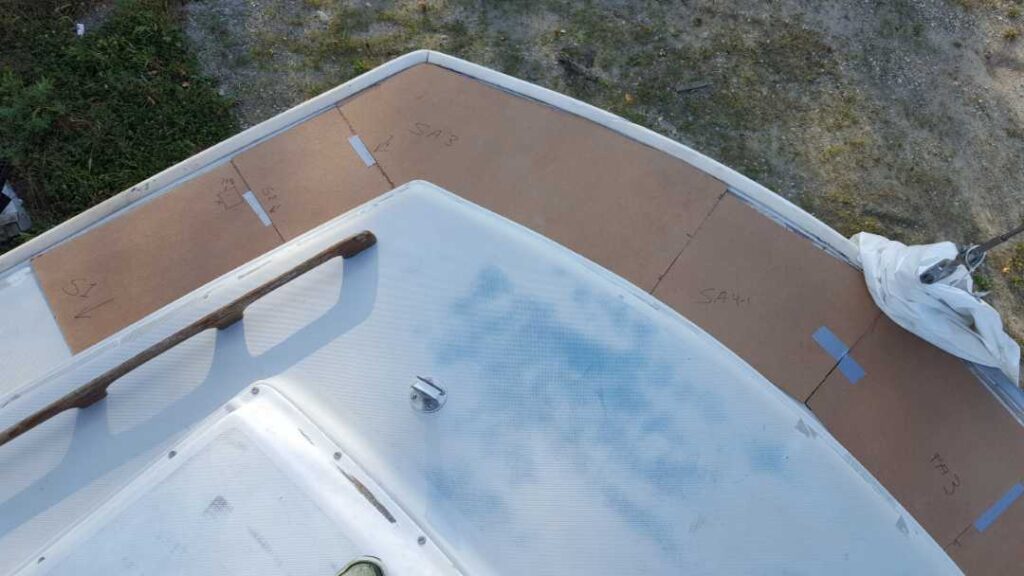
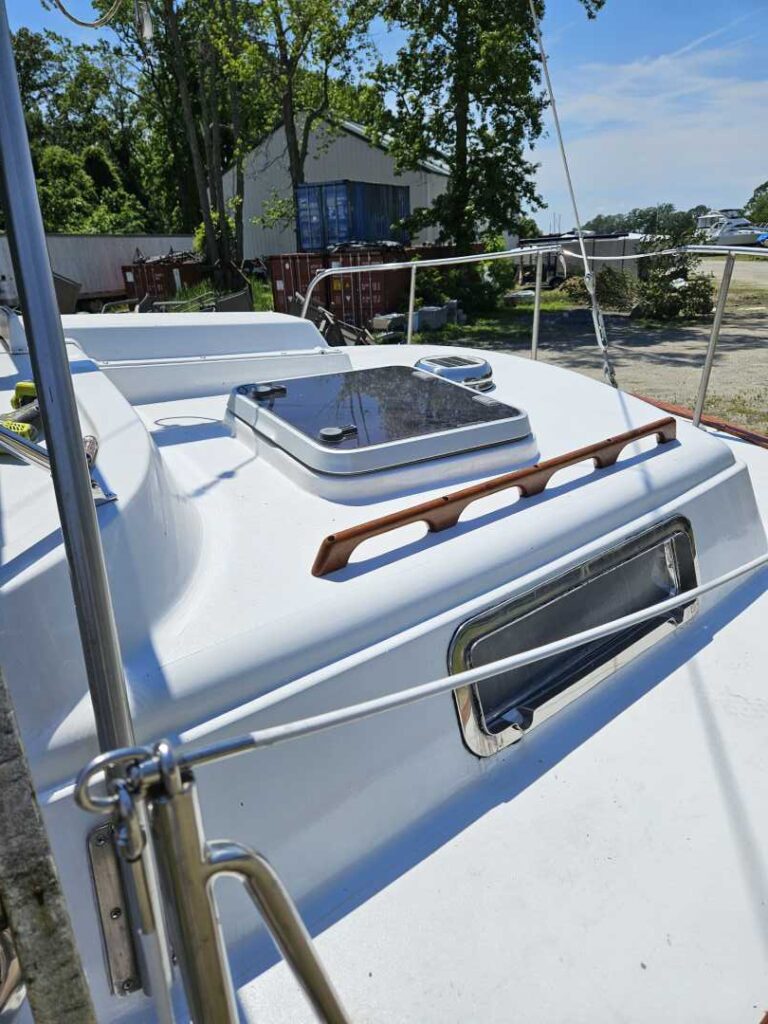
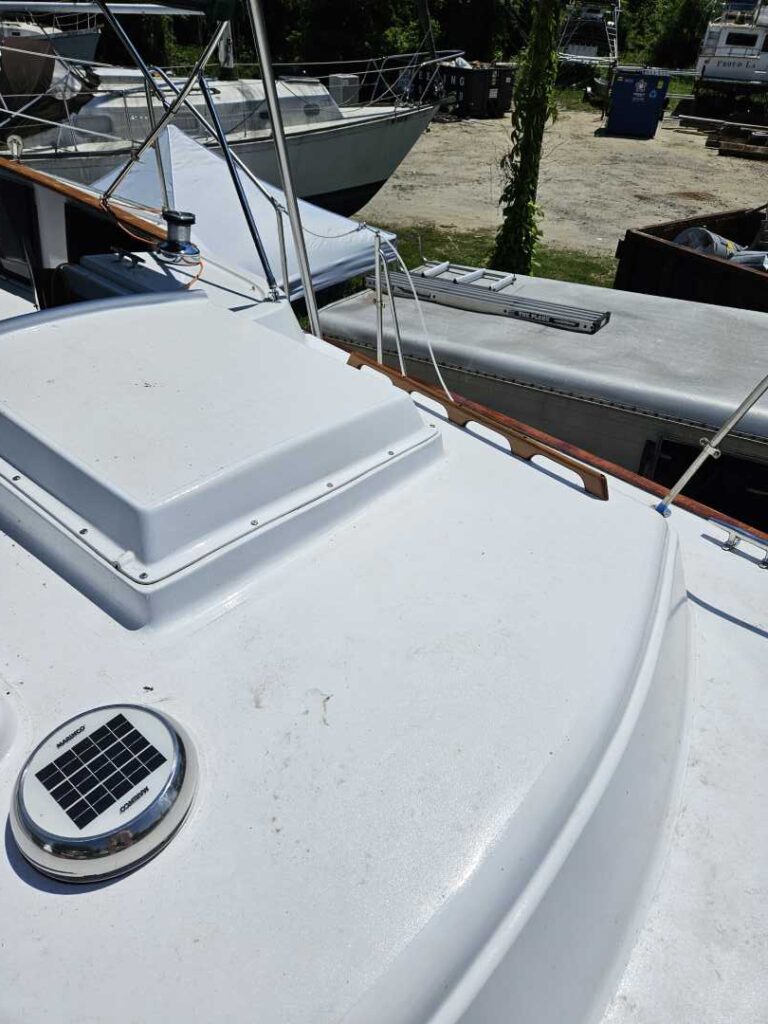
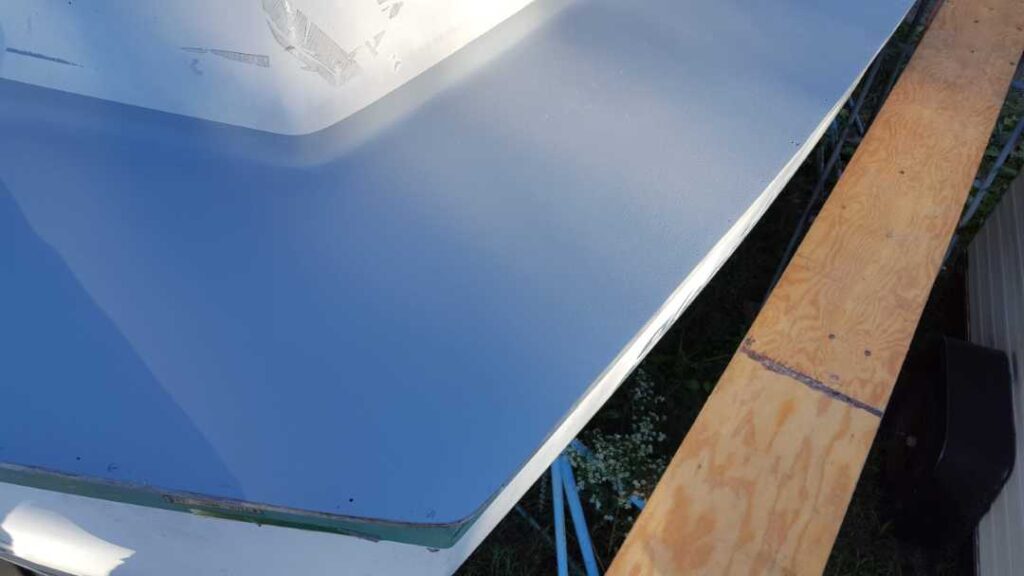
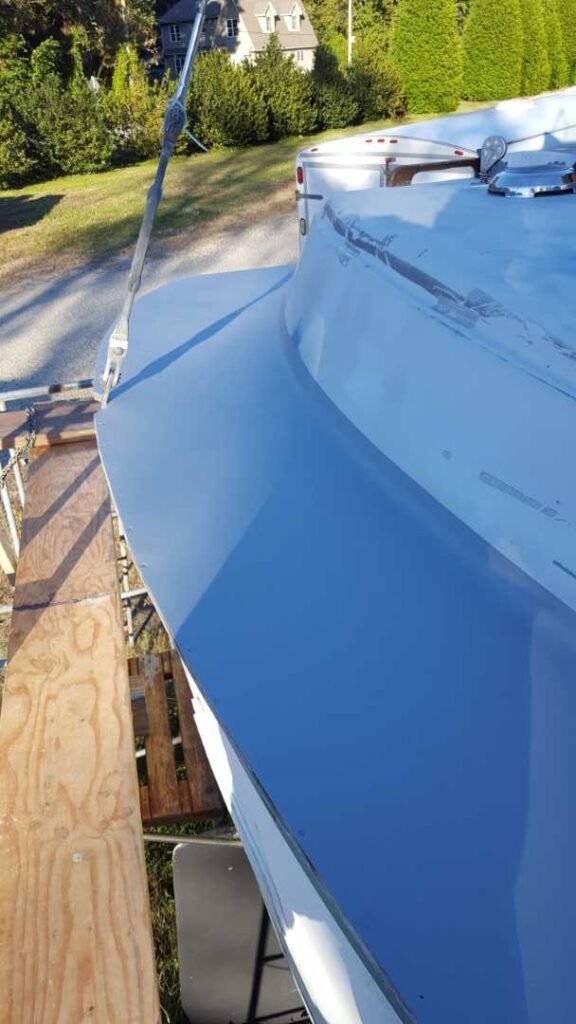
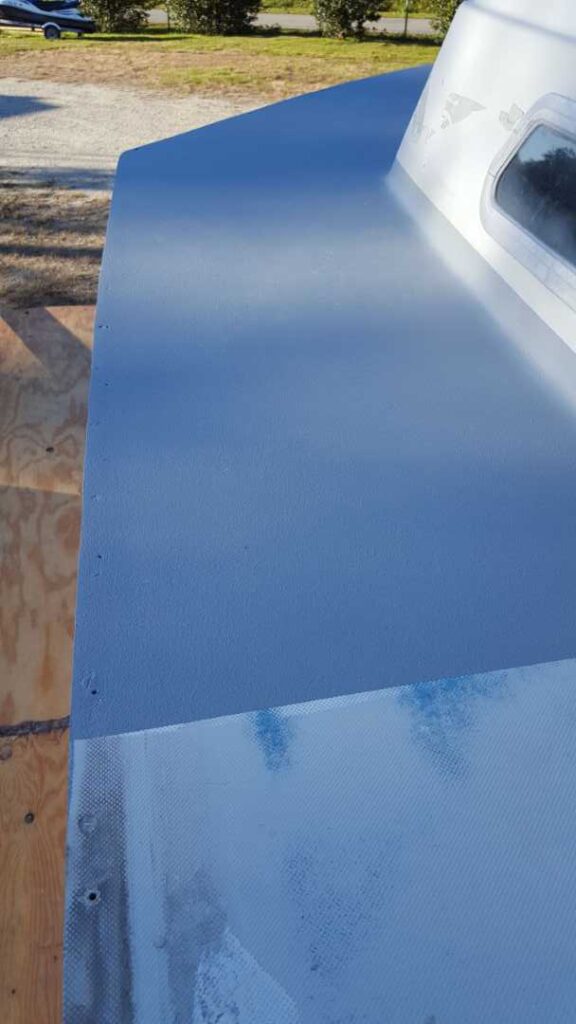
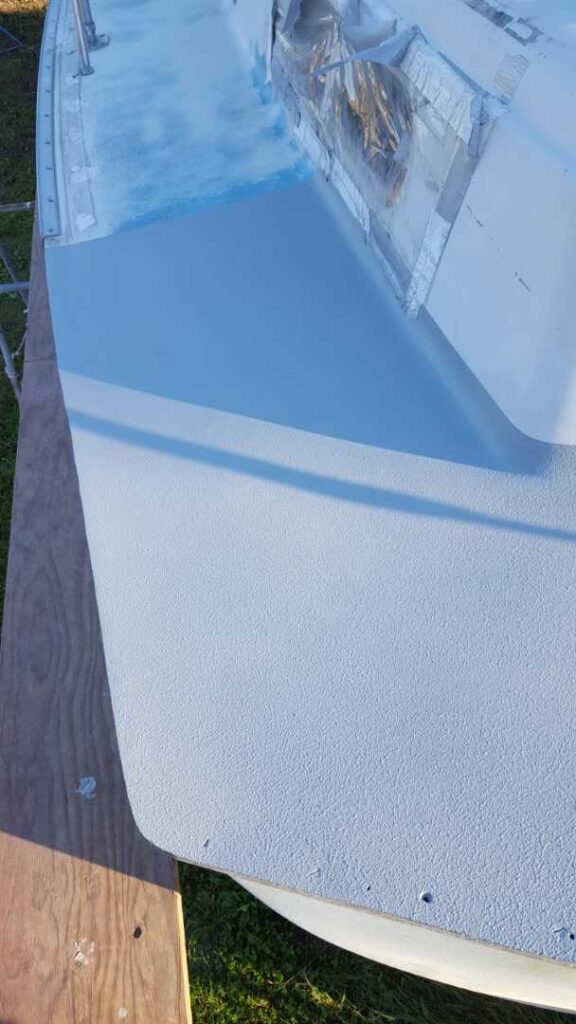
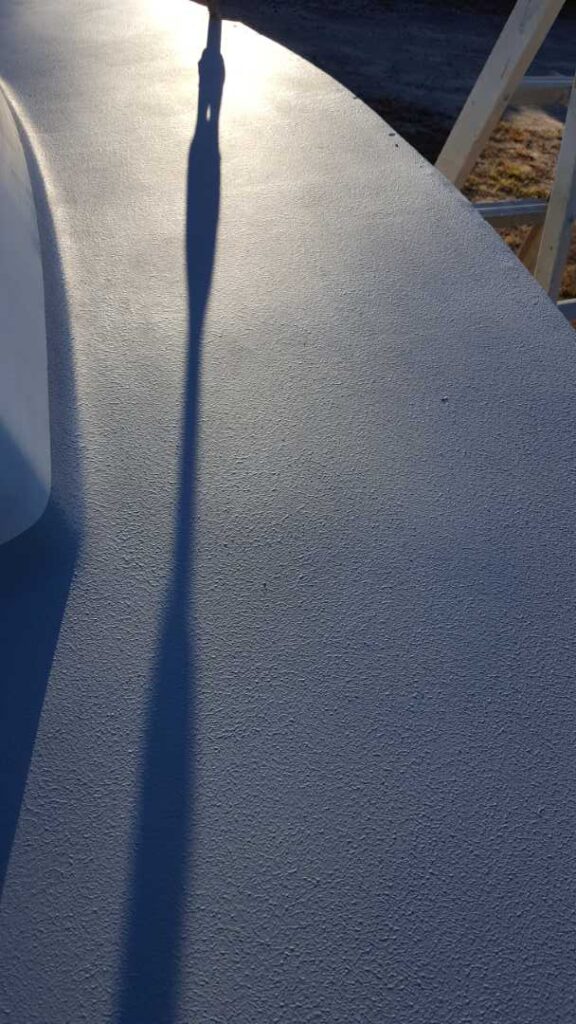
When I cut the deck out, I removed all the balsa, even the bone-dry area surrounding the aft cabin. I had discovered a material used to fill the gap in the transoms of powerboats to create a solid, strong core for mounting large outboard motors. The material is called CarbonBond PTC, made by Carbon Core Corporation in Spartanburg, SC. I performed several tests on the bonding compatibility of this material with both the polyester resin used when the boat was built and the vinyl ester resin my fiberglass finisher was going to use for the finish work. The bond was unbreakable. I then created forms to pour the compound (which has a very short working time) to fill the entire void left by removing the balsa. The photos here show the process. The result is an incredibly strong and solid deck that is impervious to water.

Aft Cabin Restoration
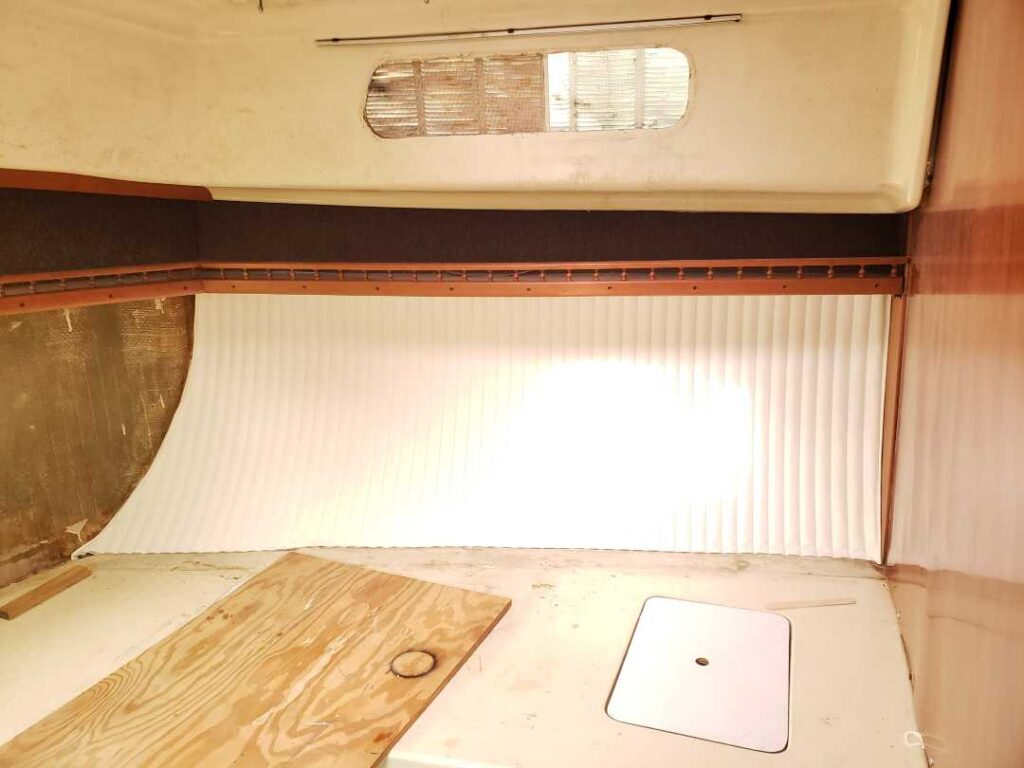
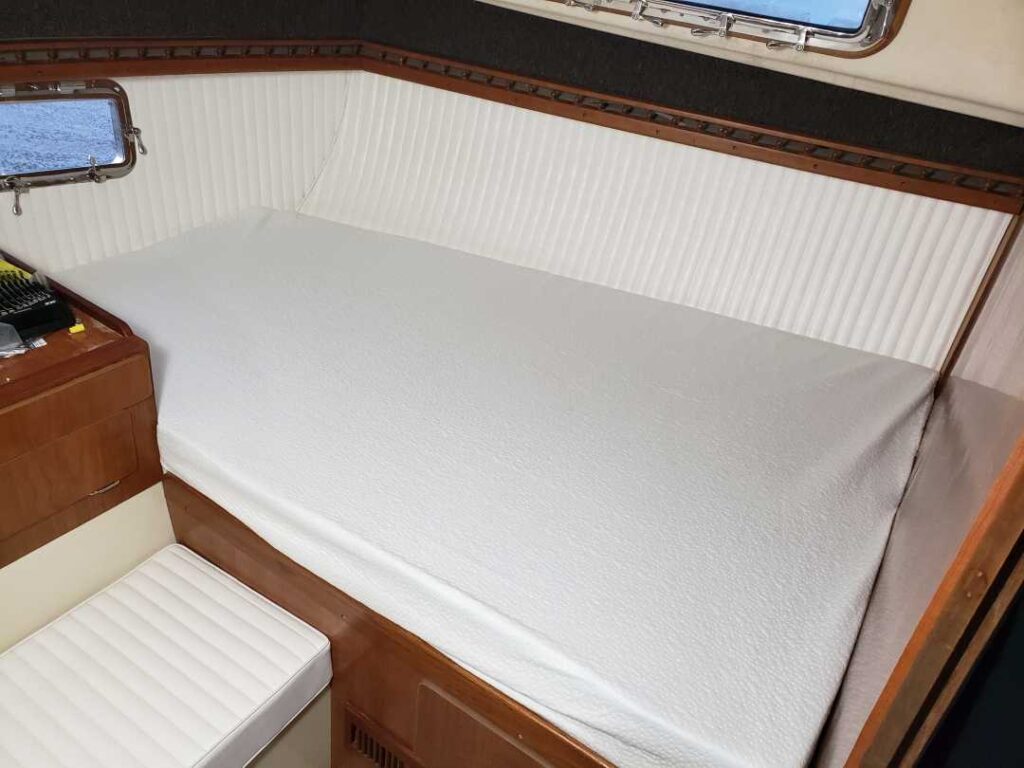
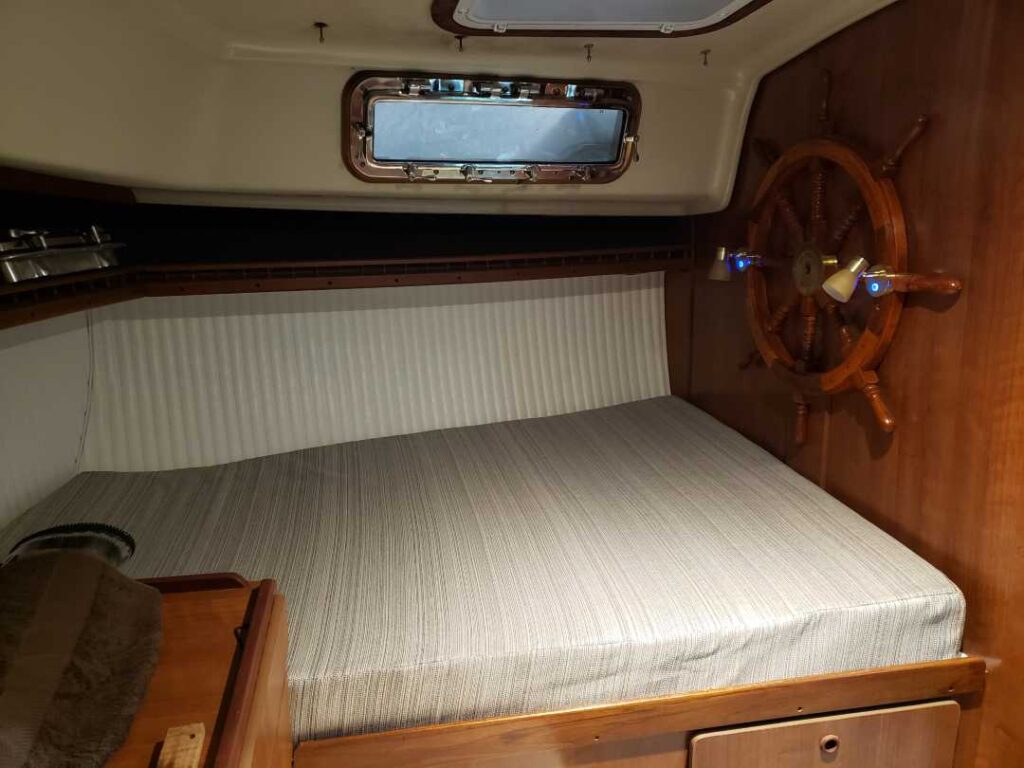
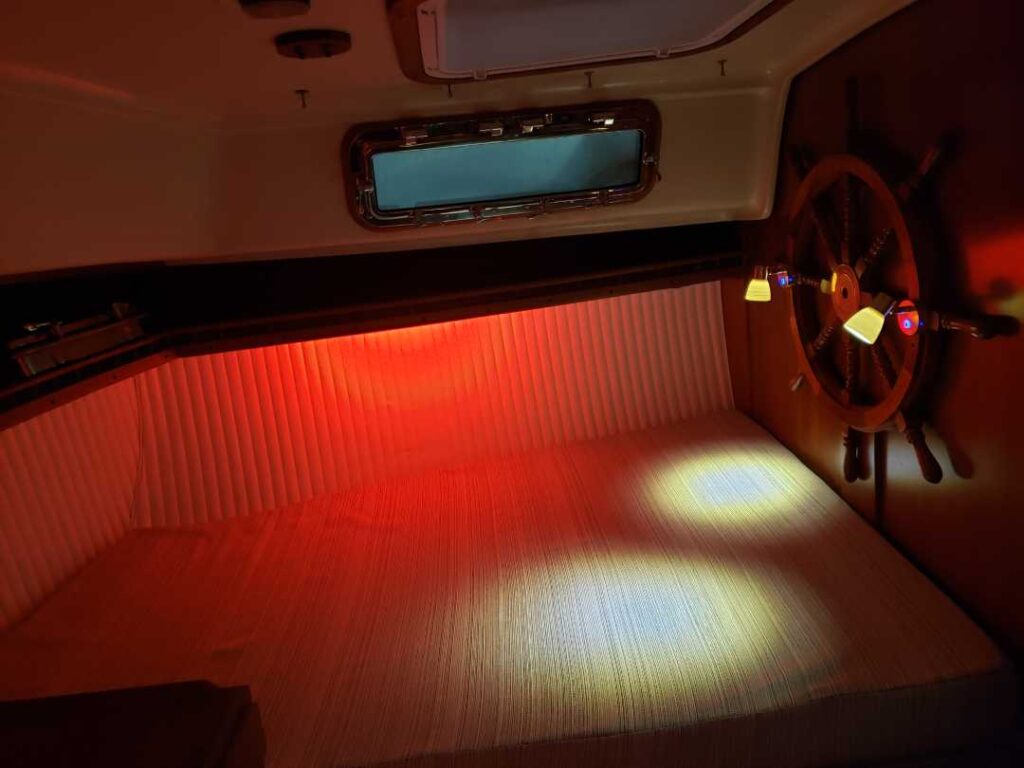
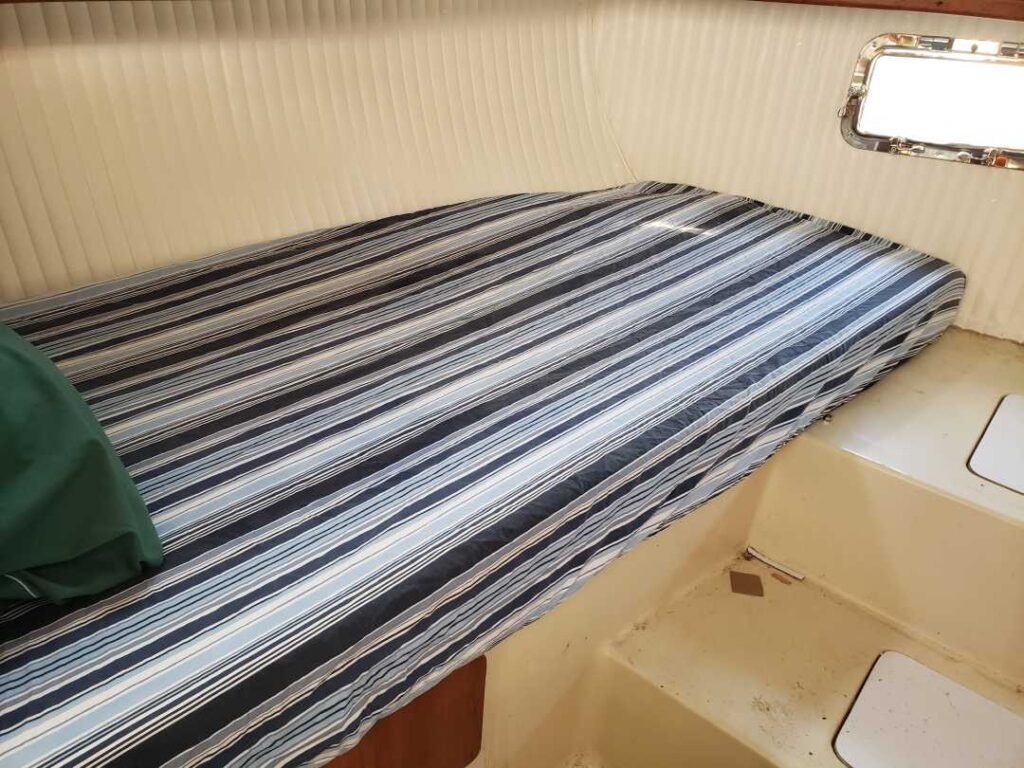
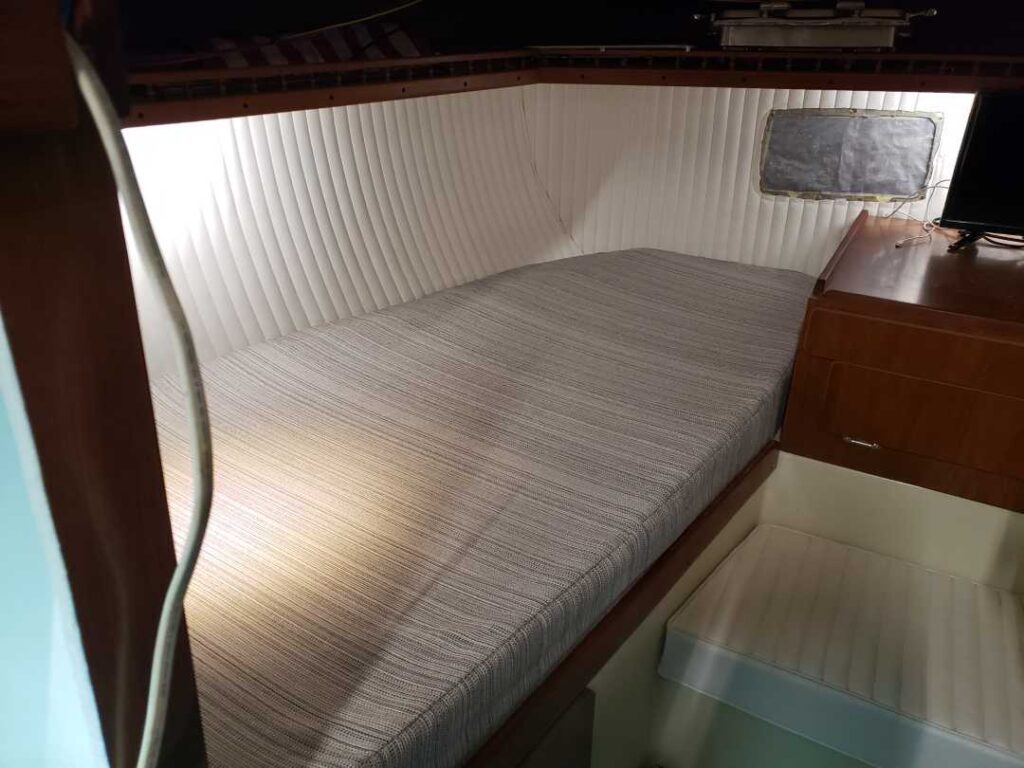
After repairing the aft deck, it was time to tackle the aft cabin. This cabin had been occupied for more than 25 years by our kids, until now. My admiral, the wife, stated “ this will be our stateroom now, they can sleep elsewhere”
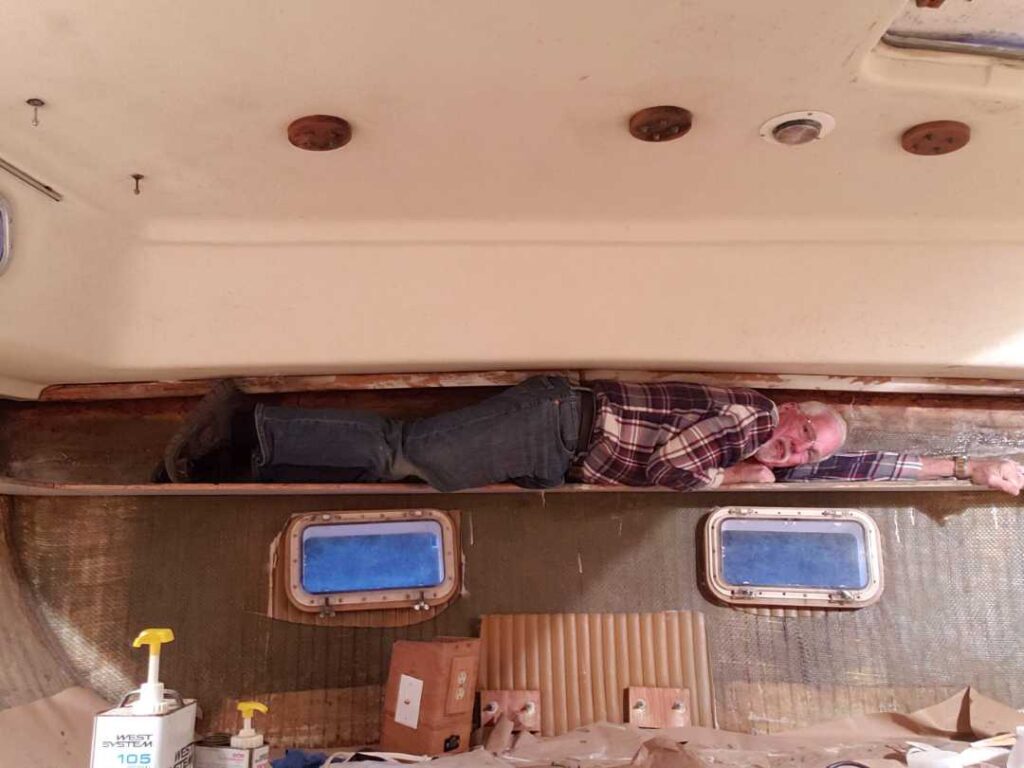
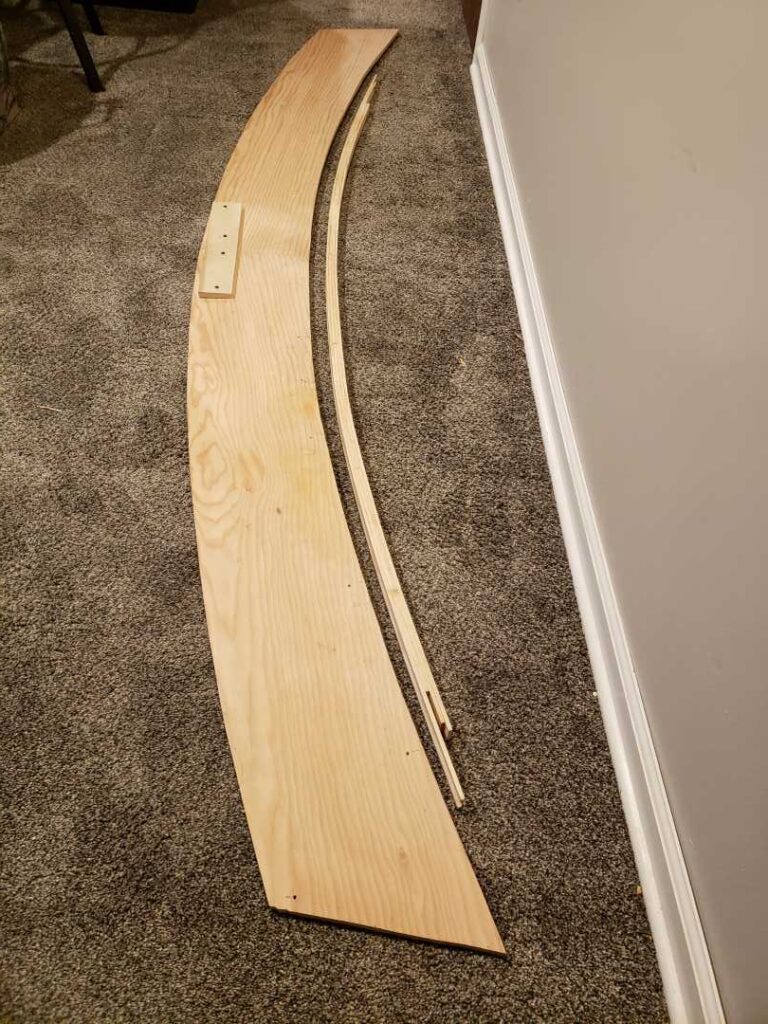
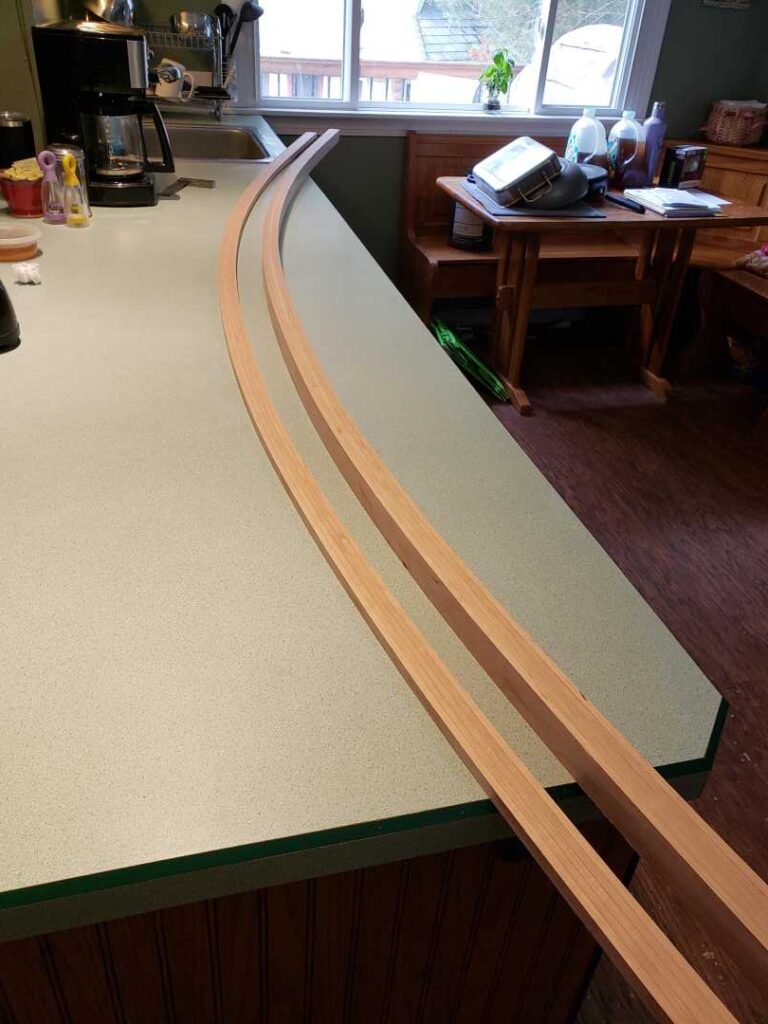
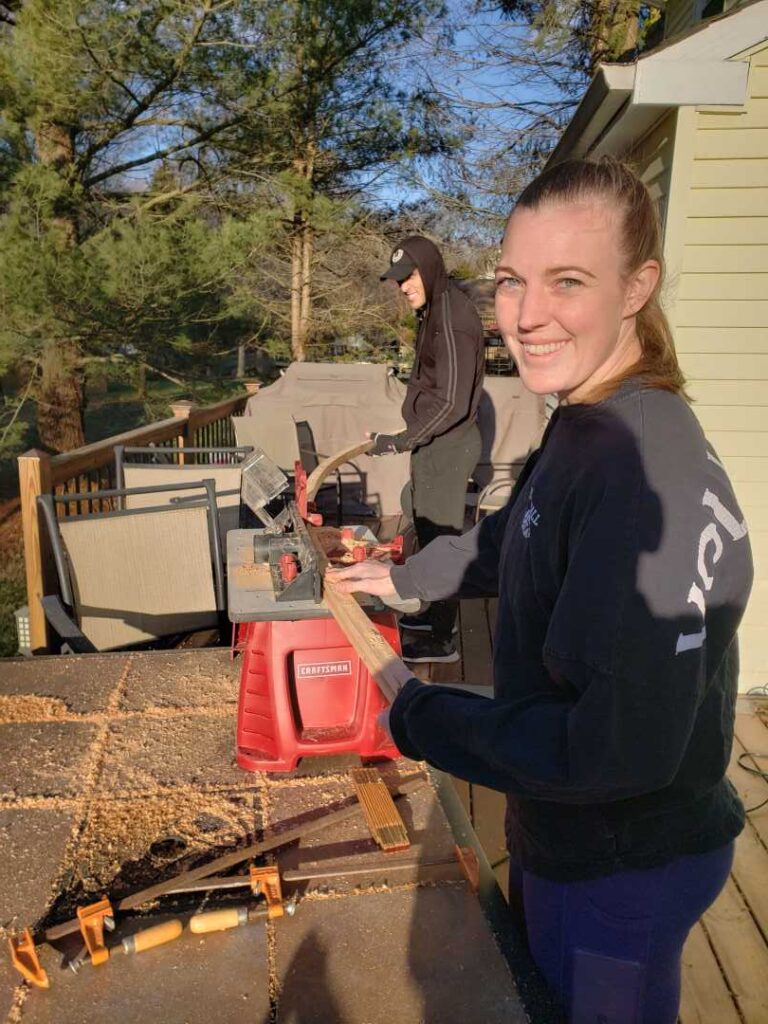
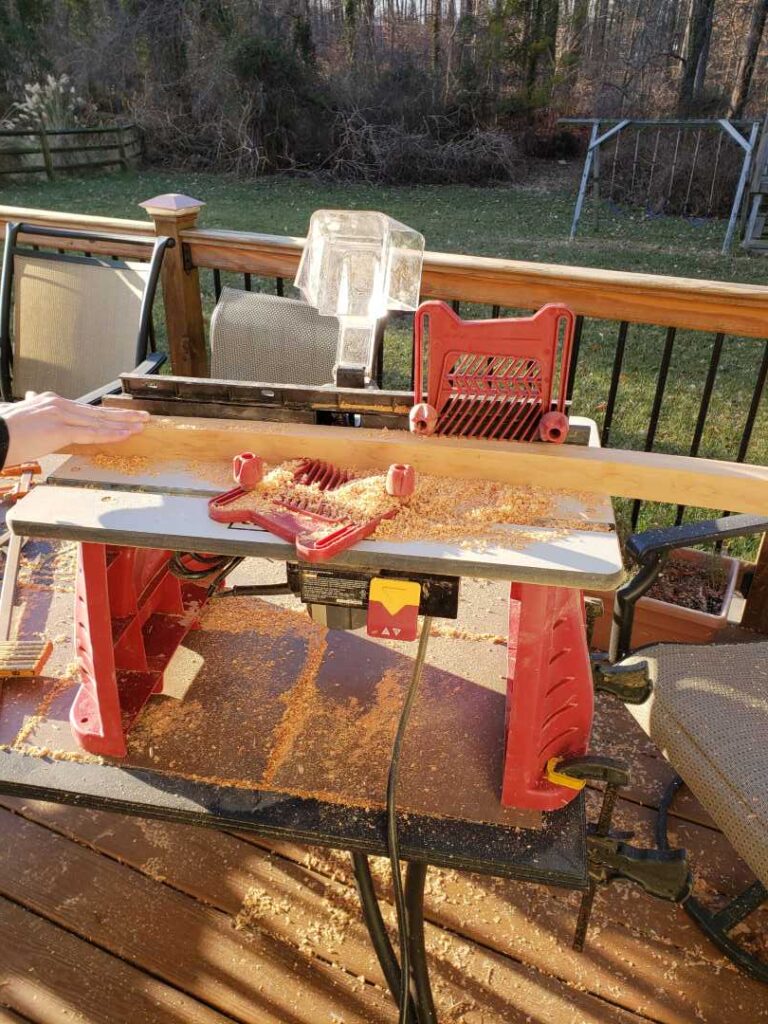
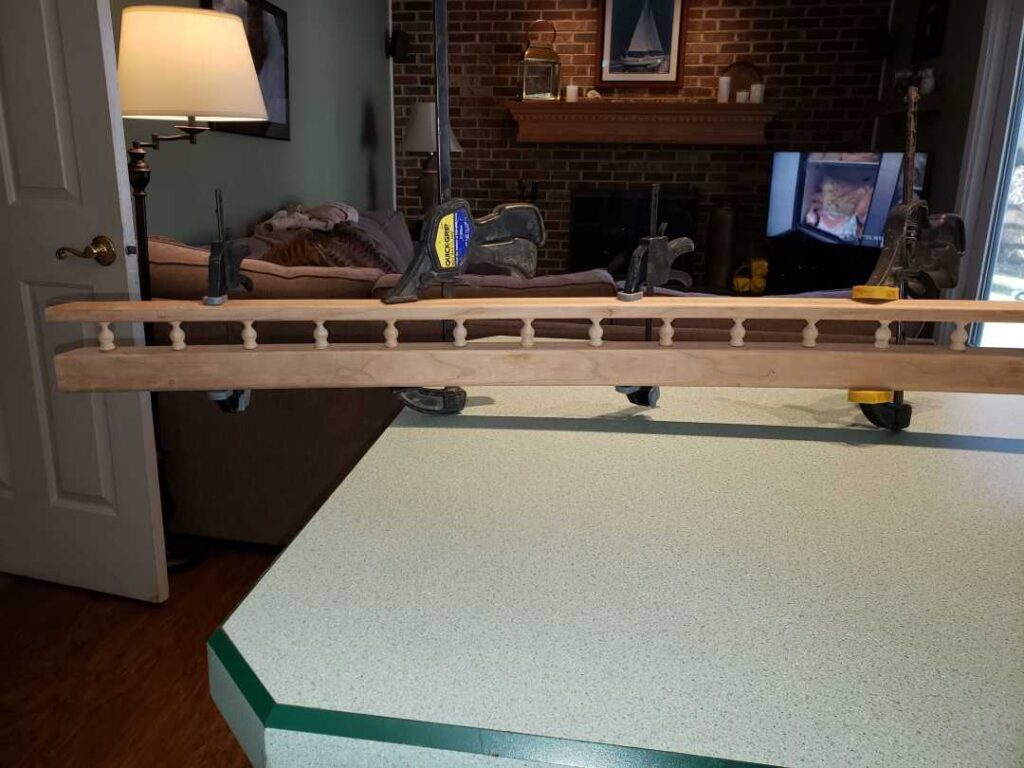
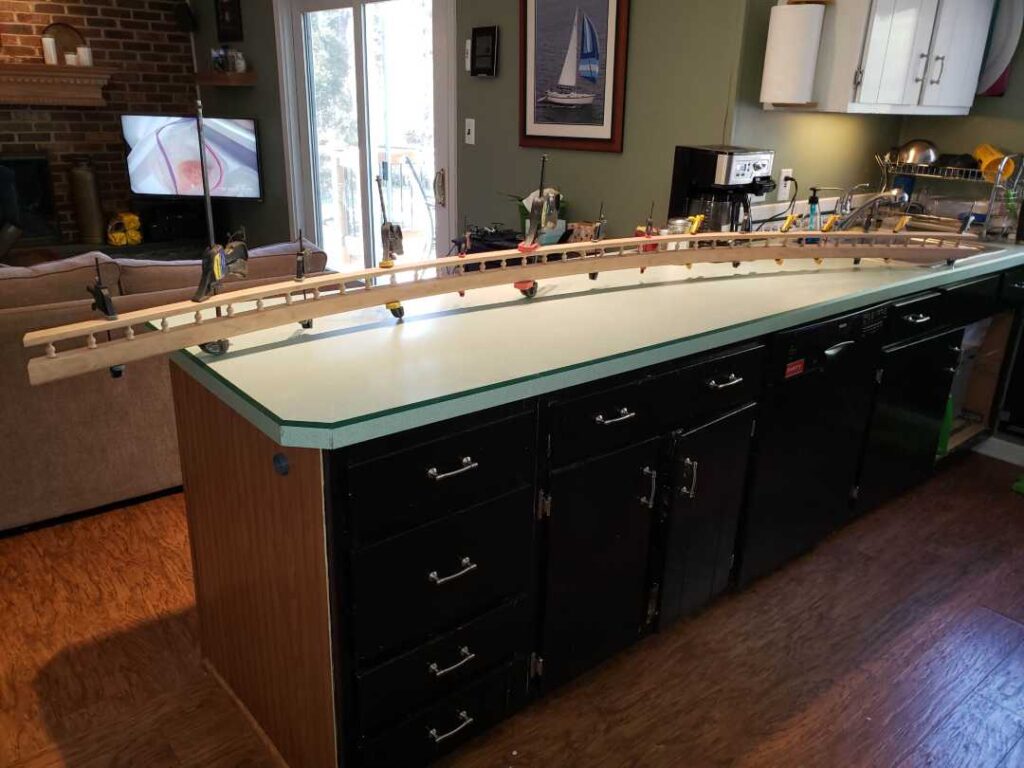
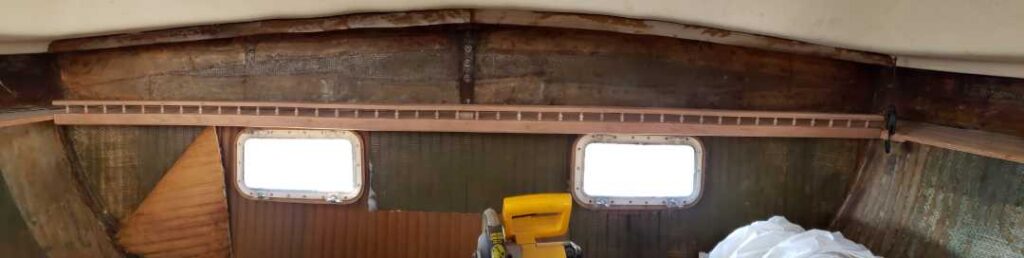
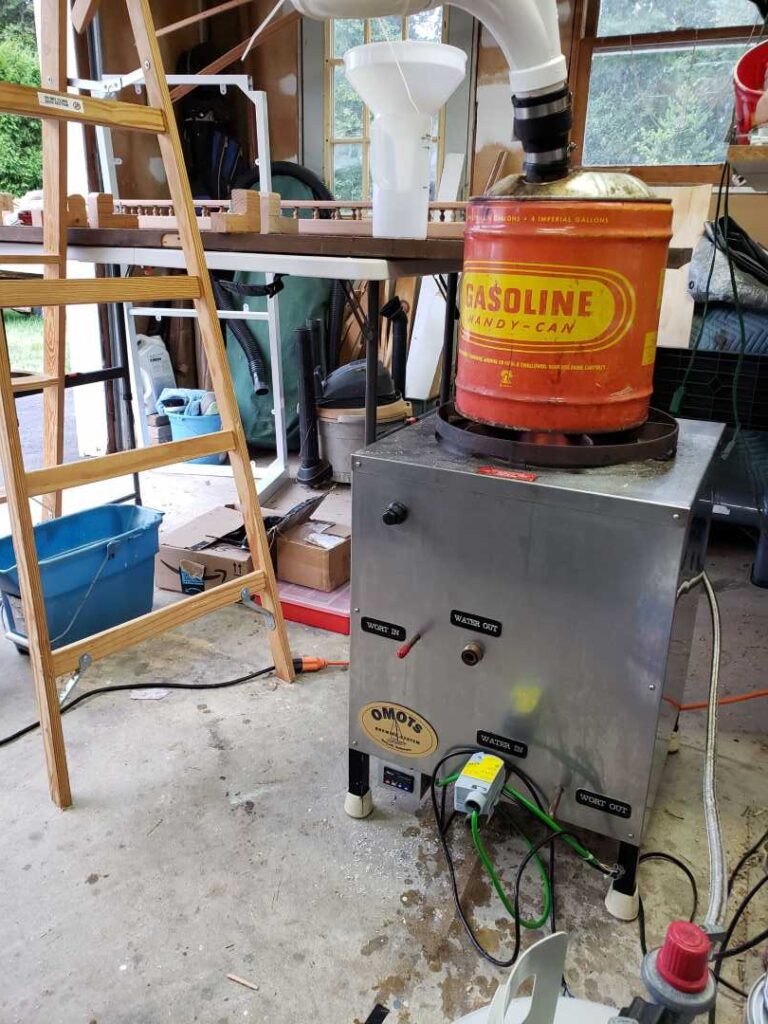
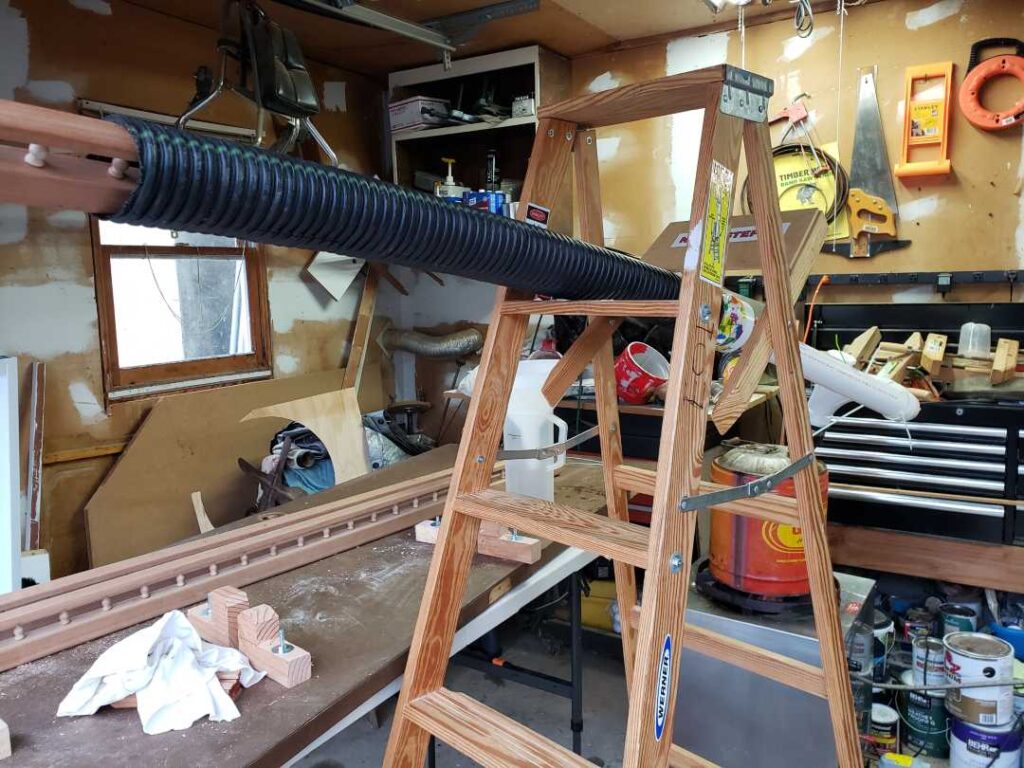
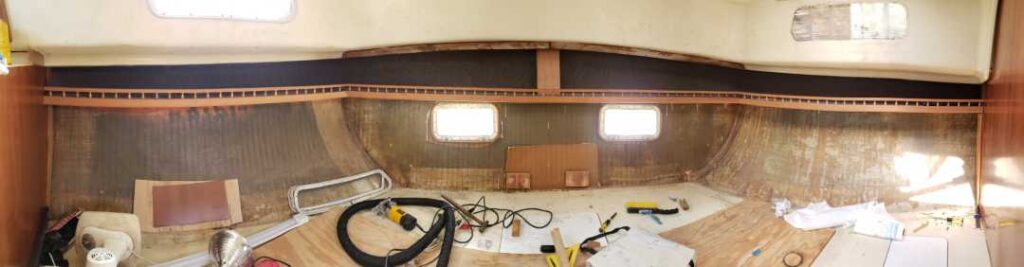
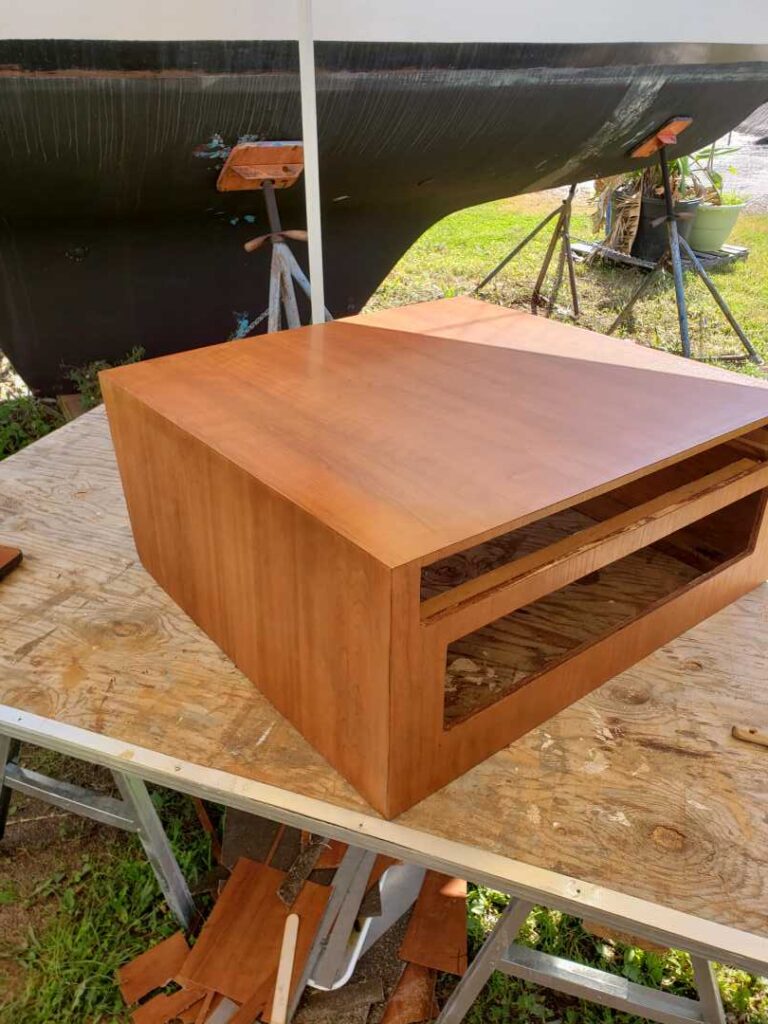
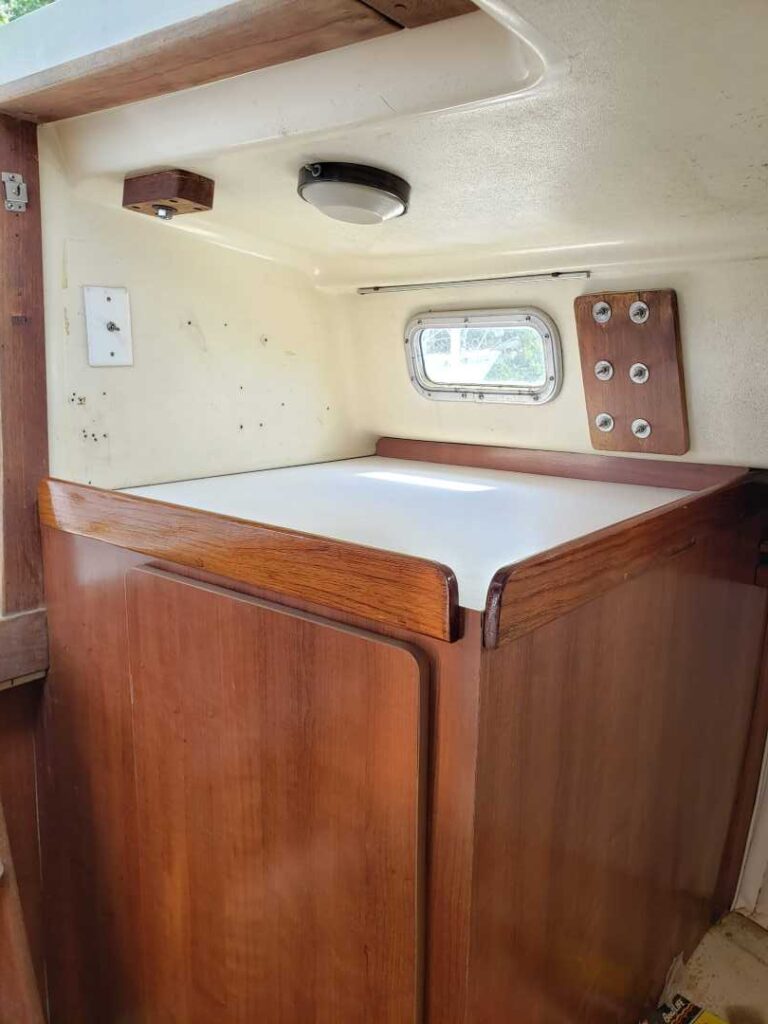
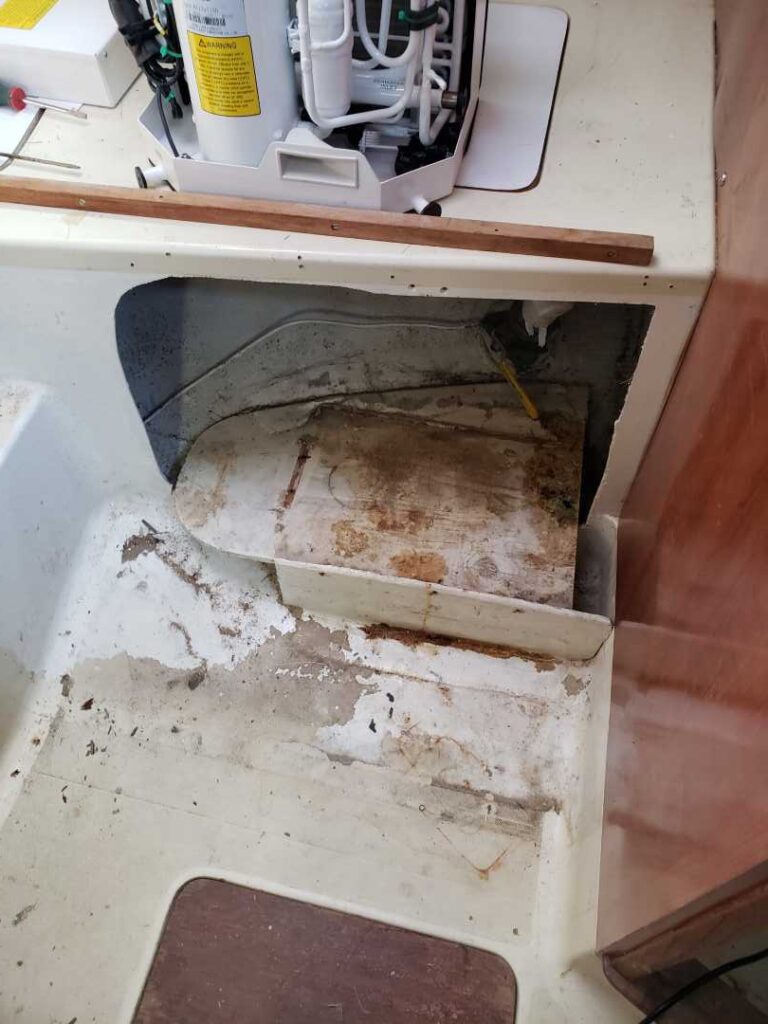
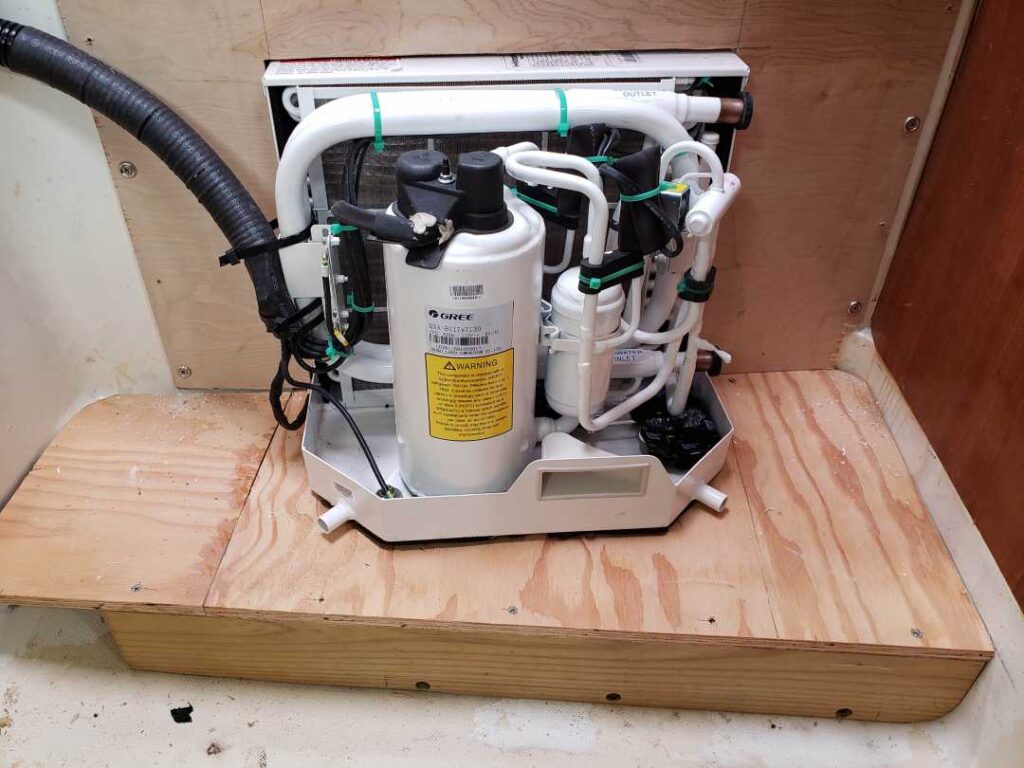
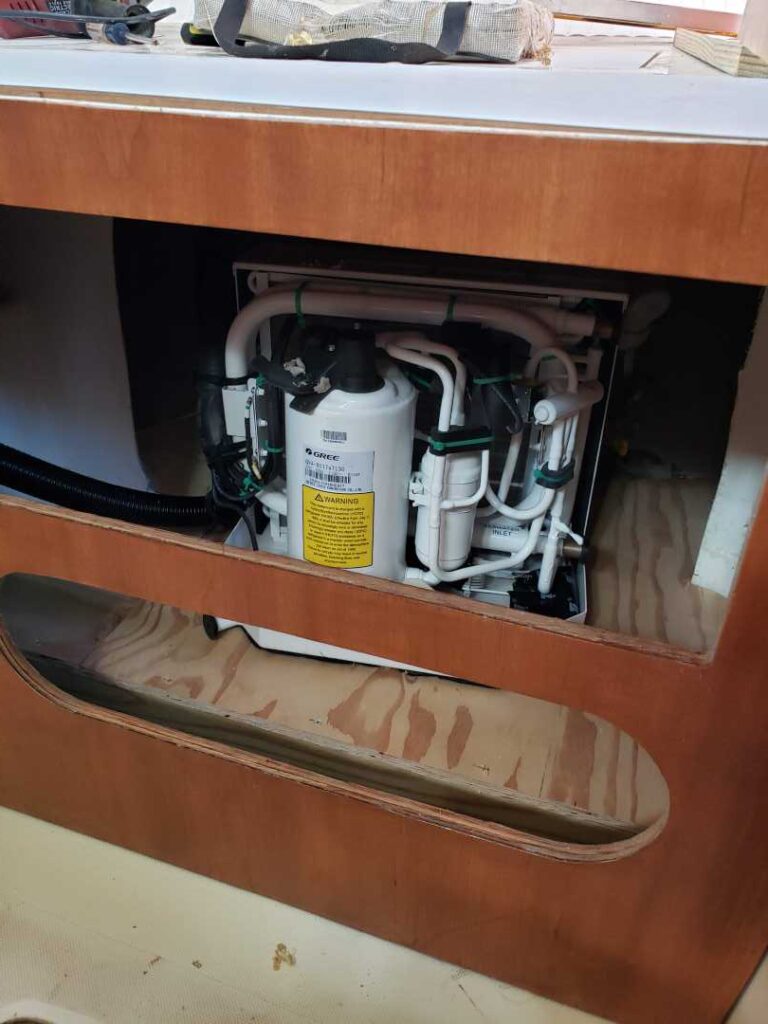
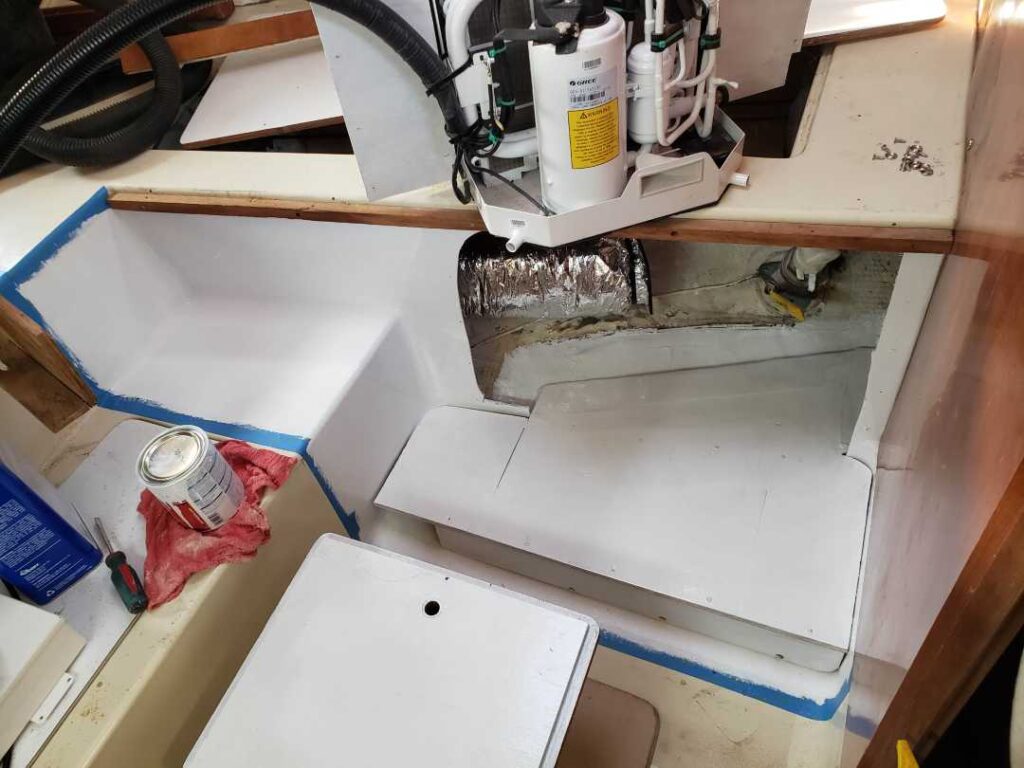
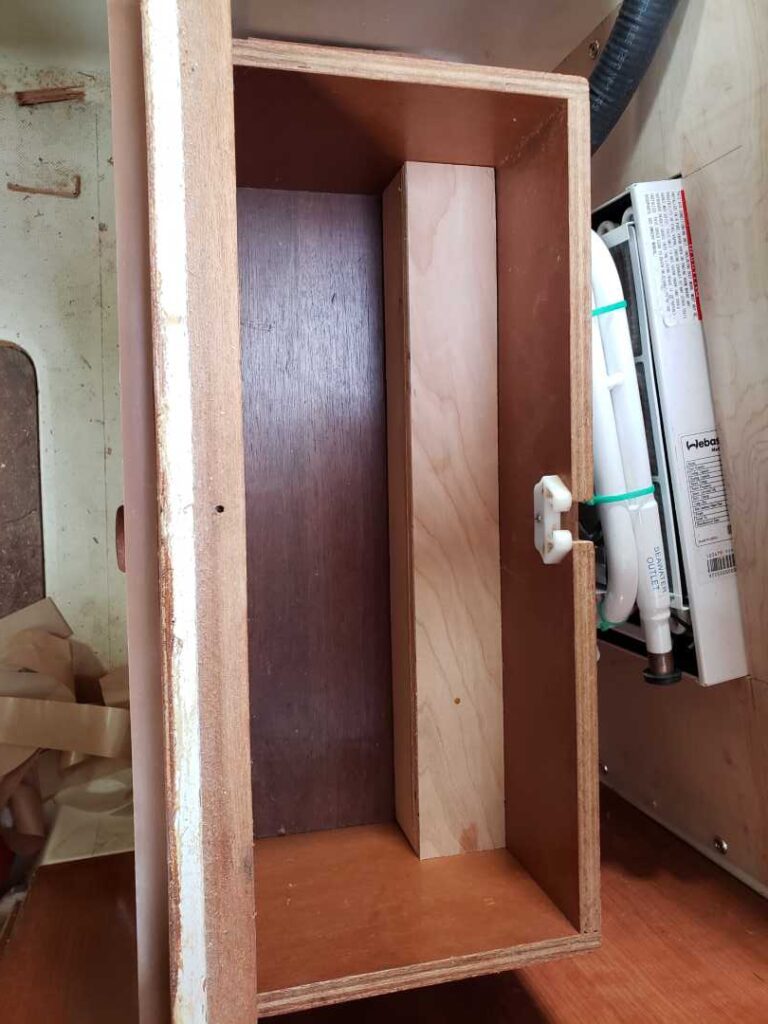
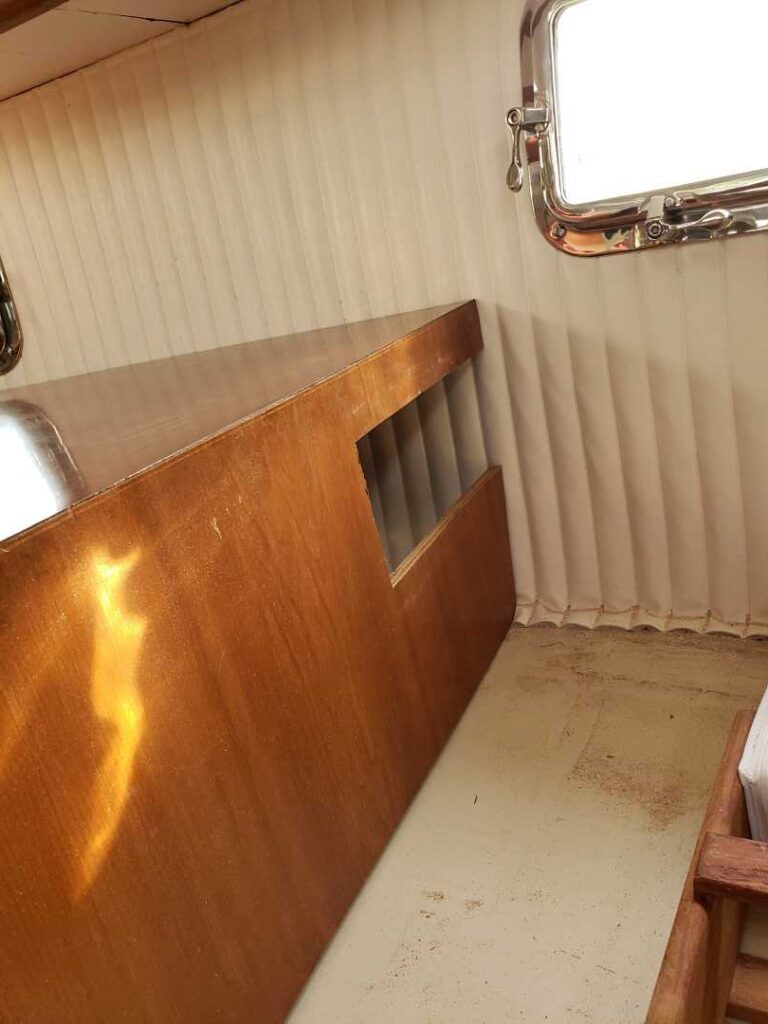
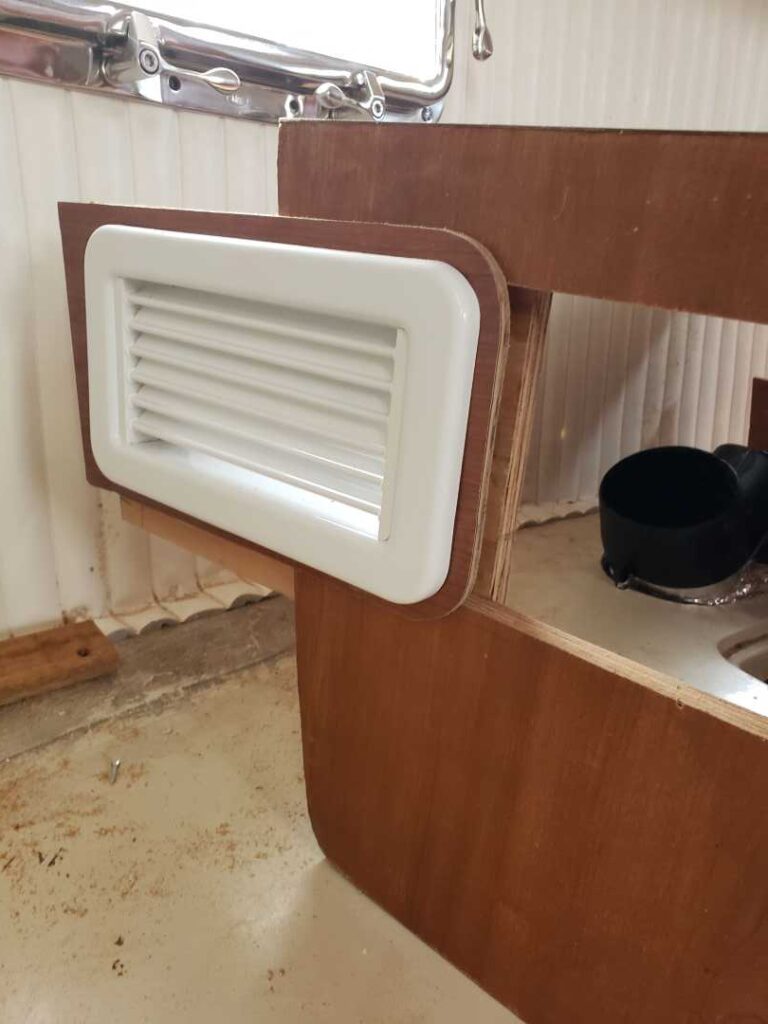
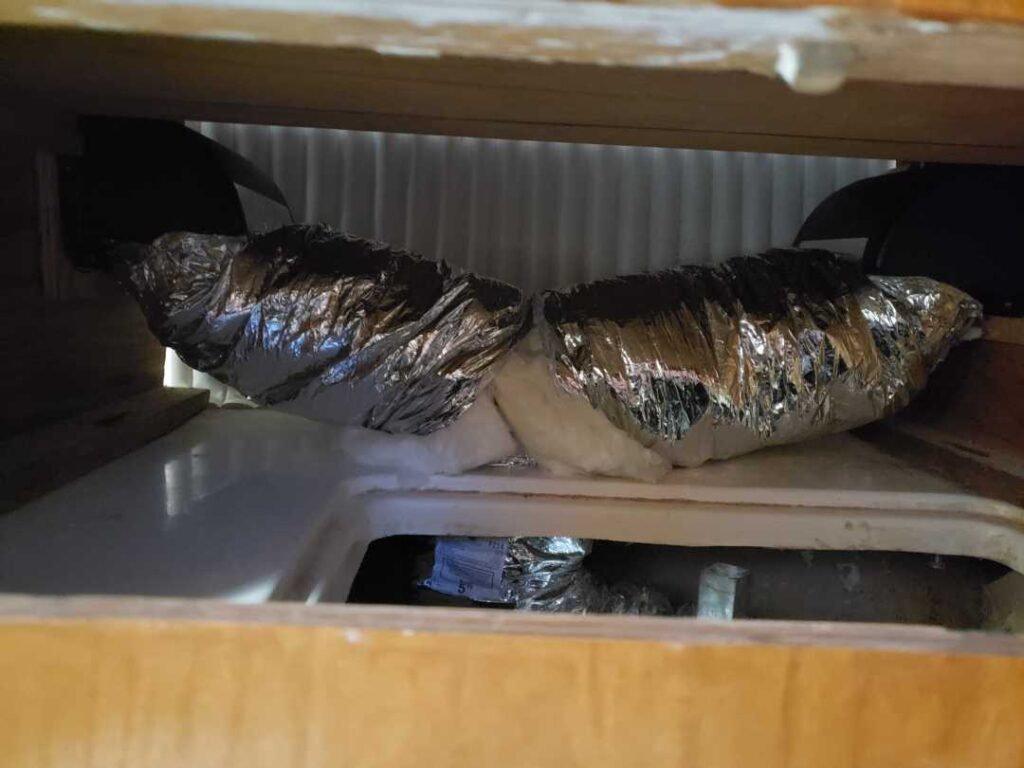
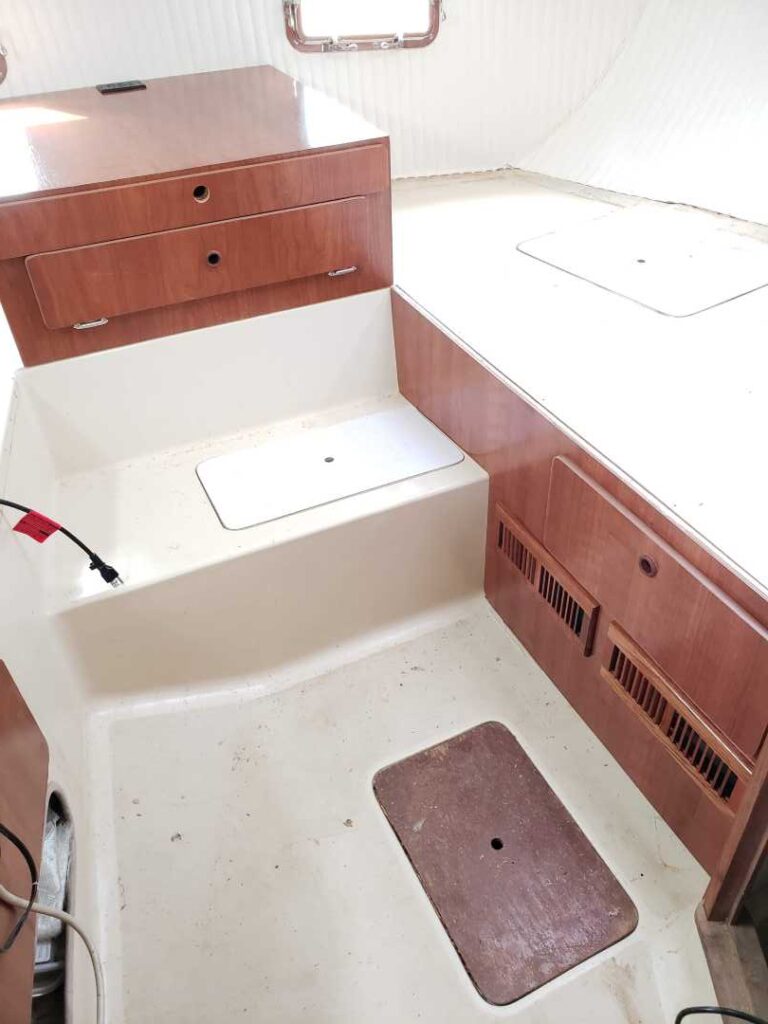
It started by removing all the shelving and replacing it with a new curved aft shelf to follow the contour of the doghouse. That led to a complete revamp of the cabin, bunks and aft head. We also added heat and air as well.

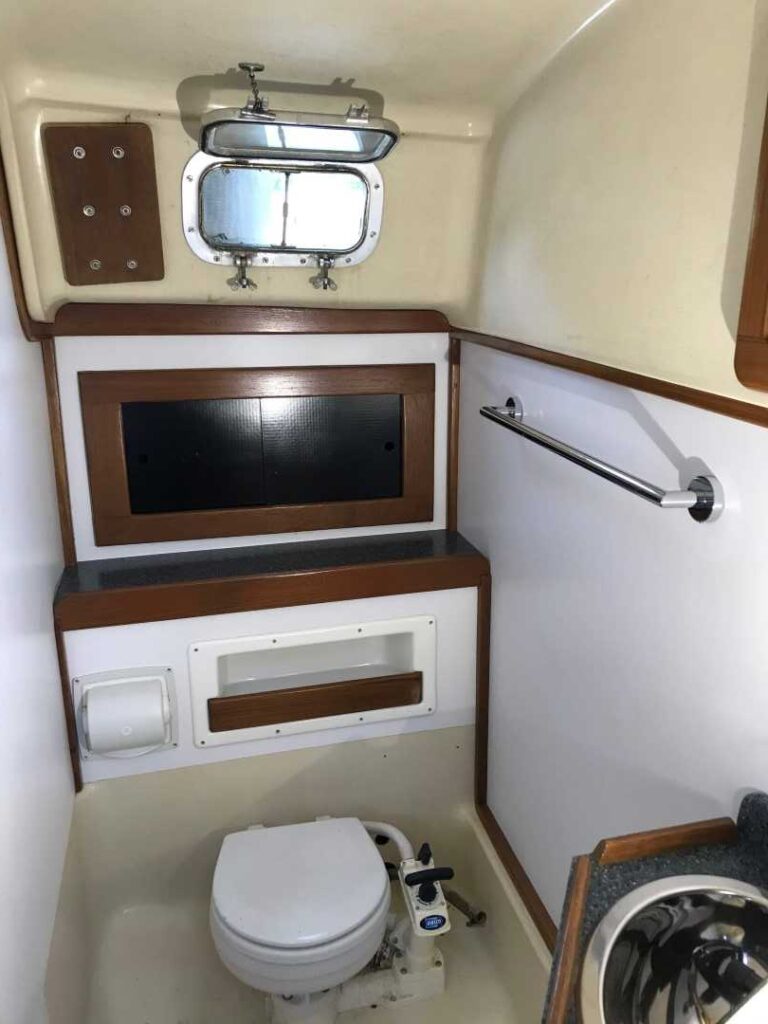
Aft Head Restoration
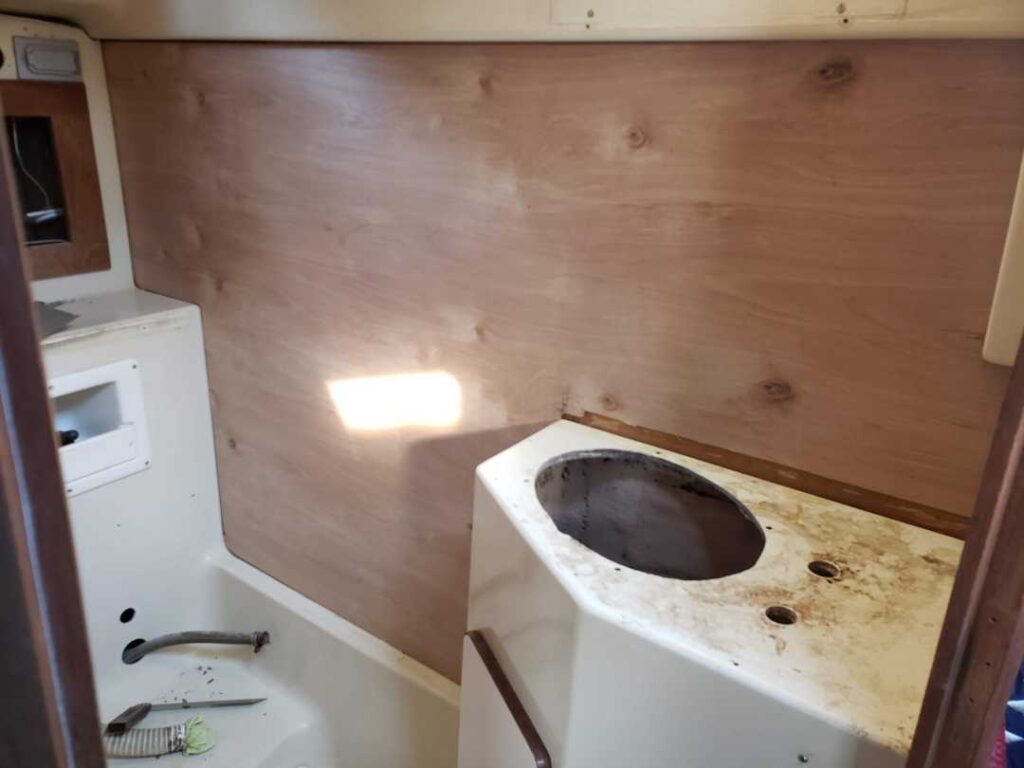
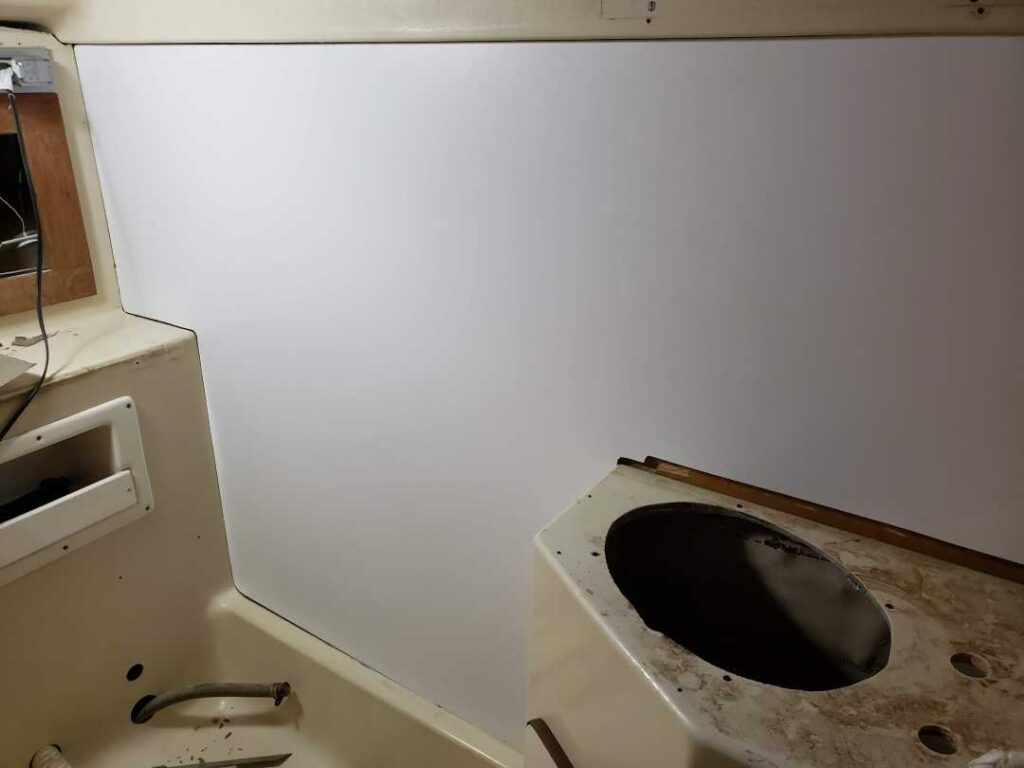
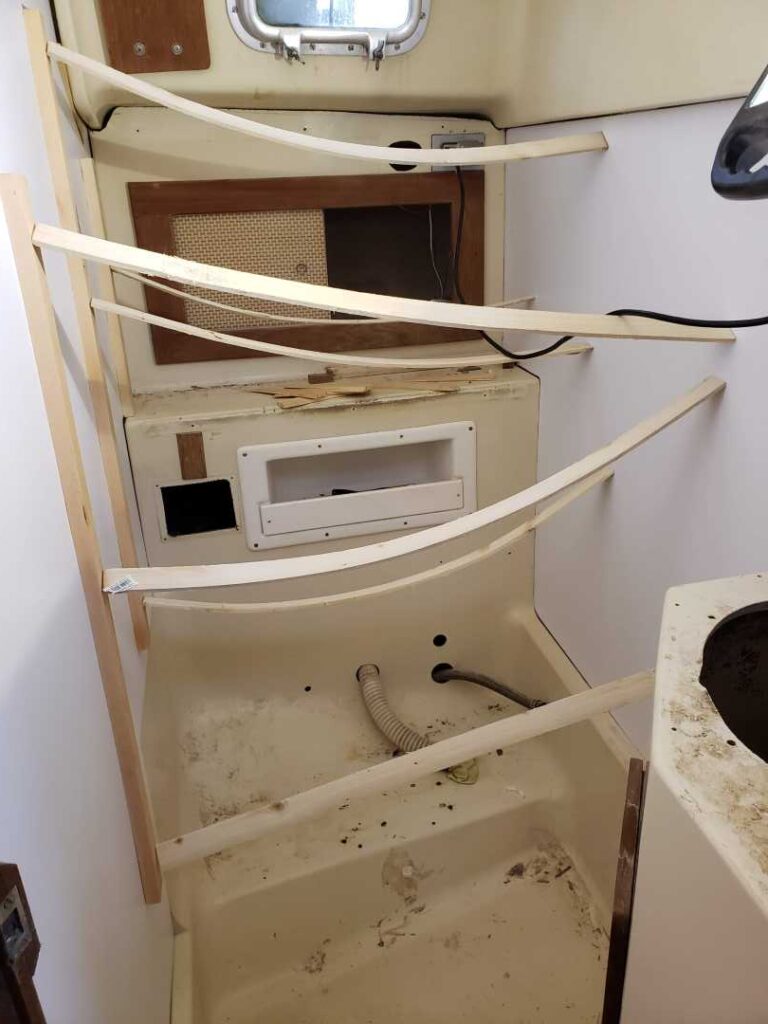
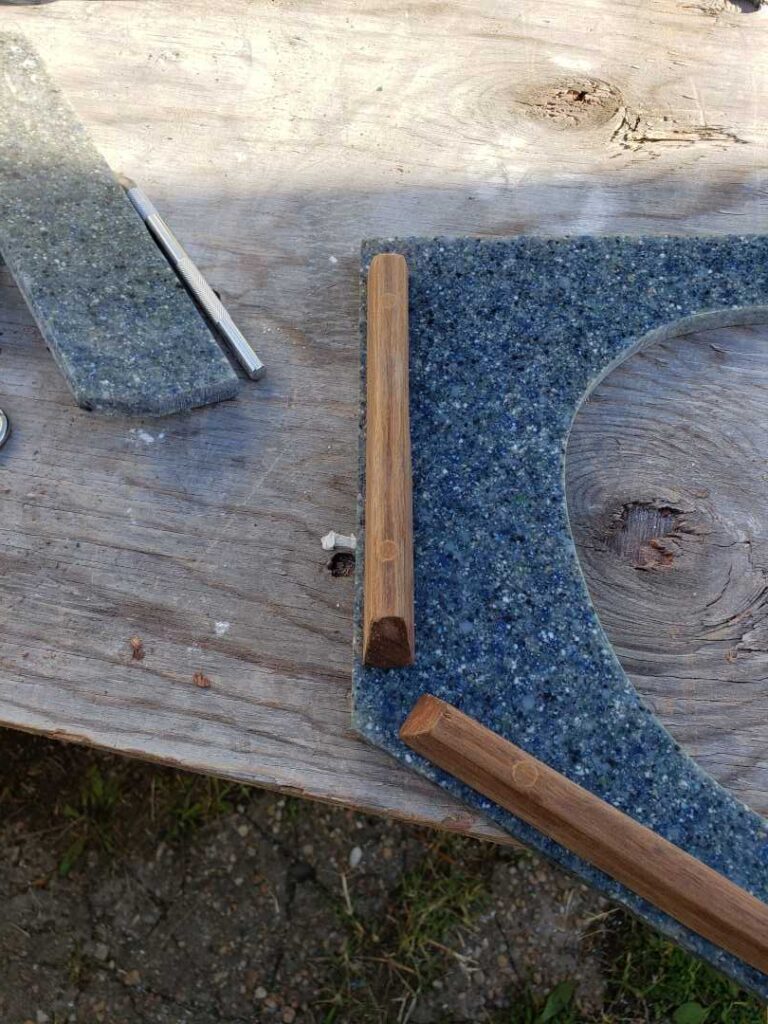
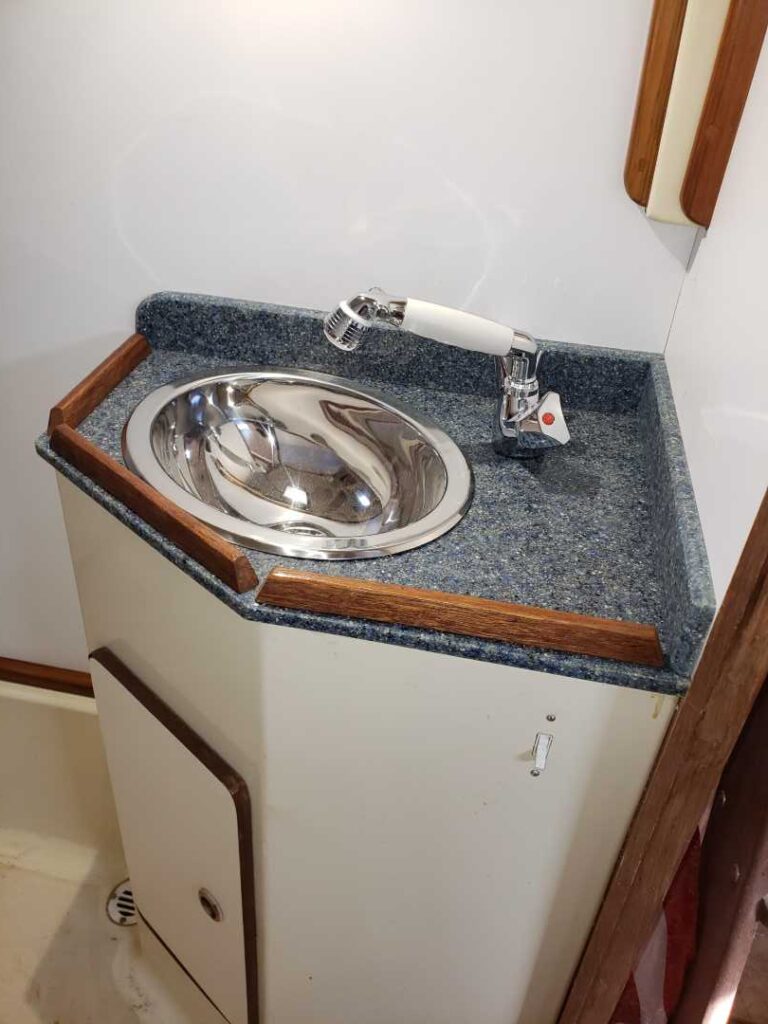
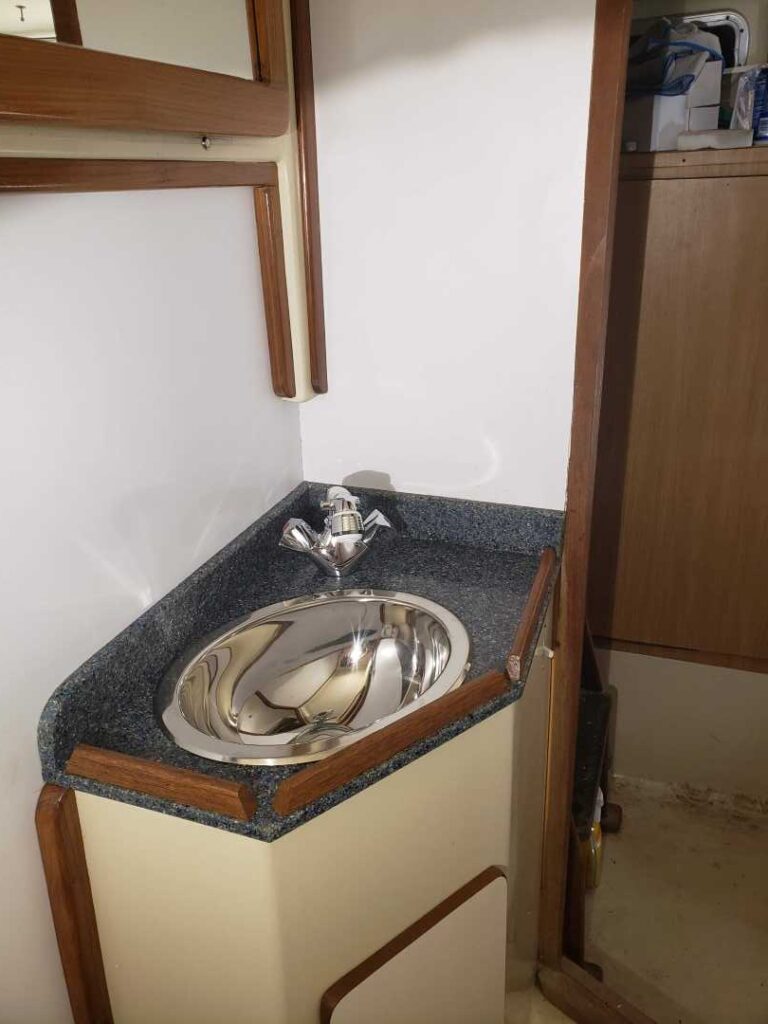
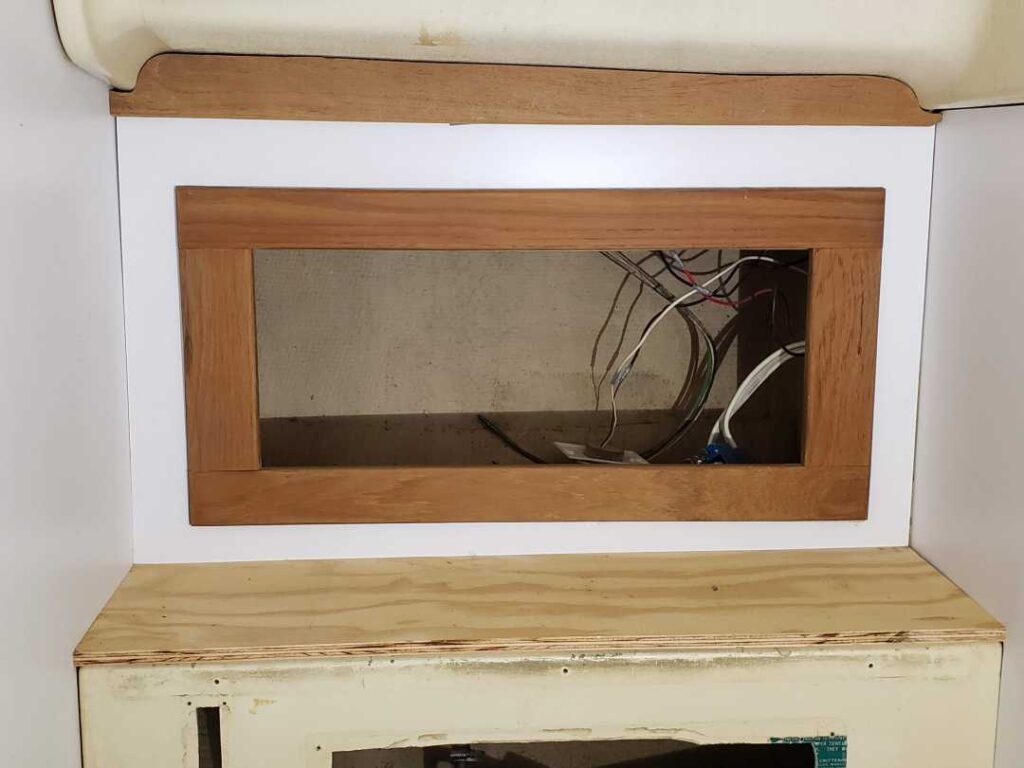
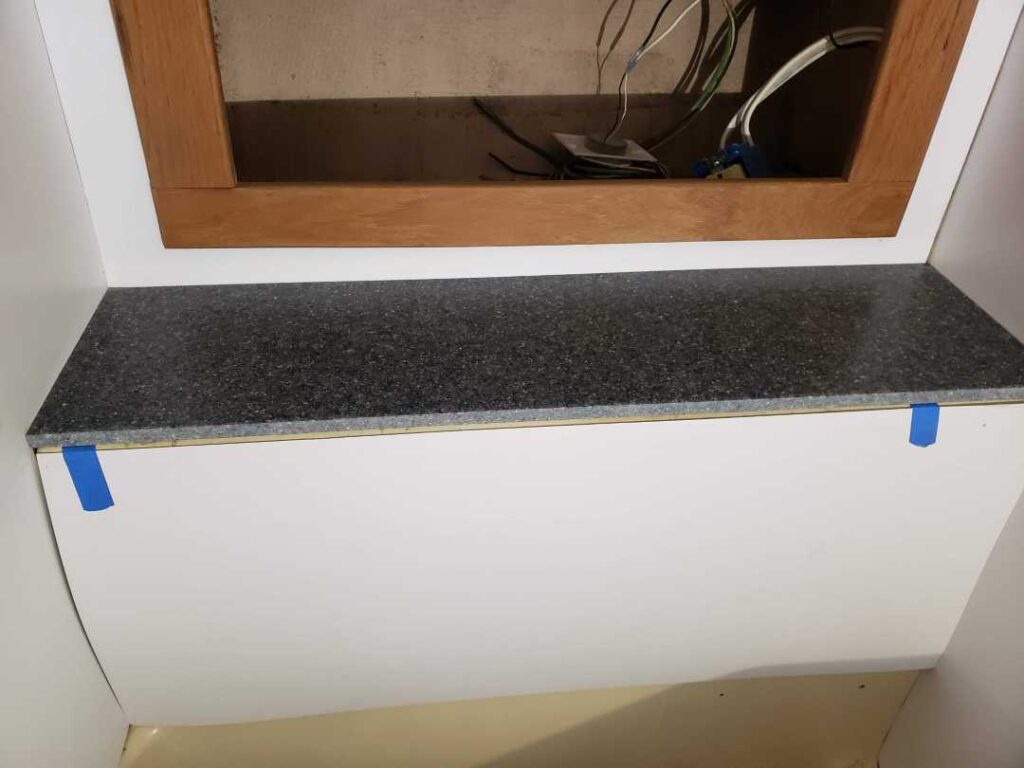
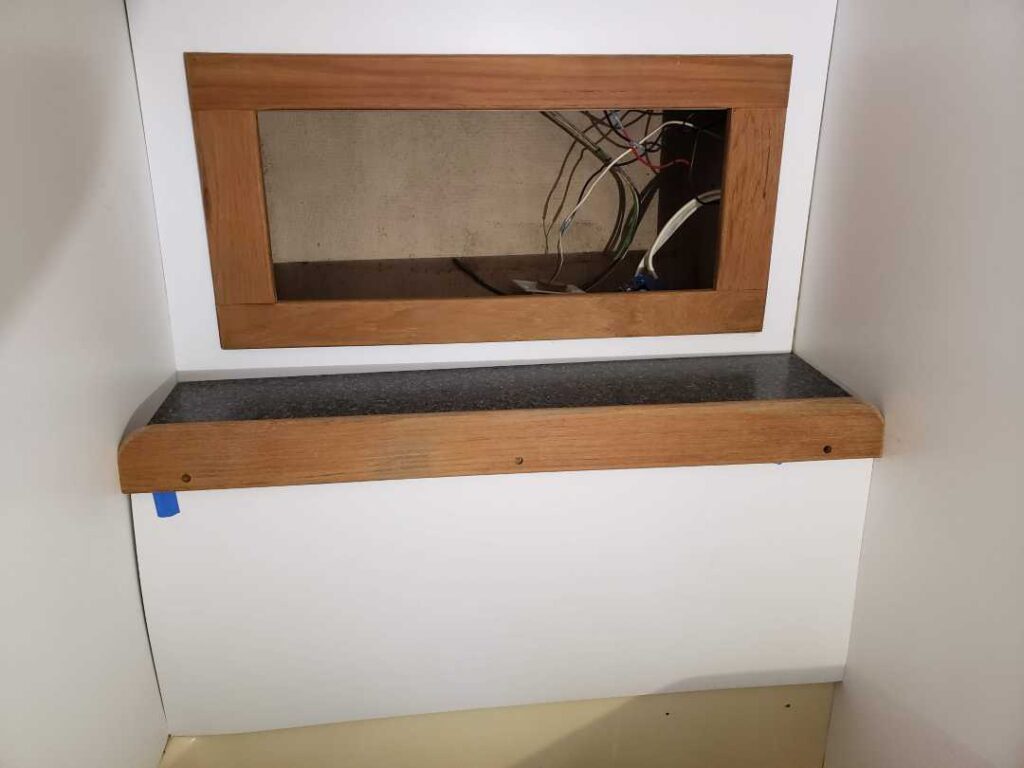
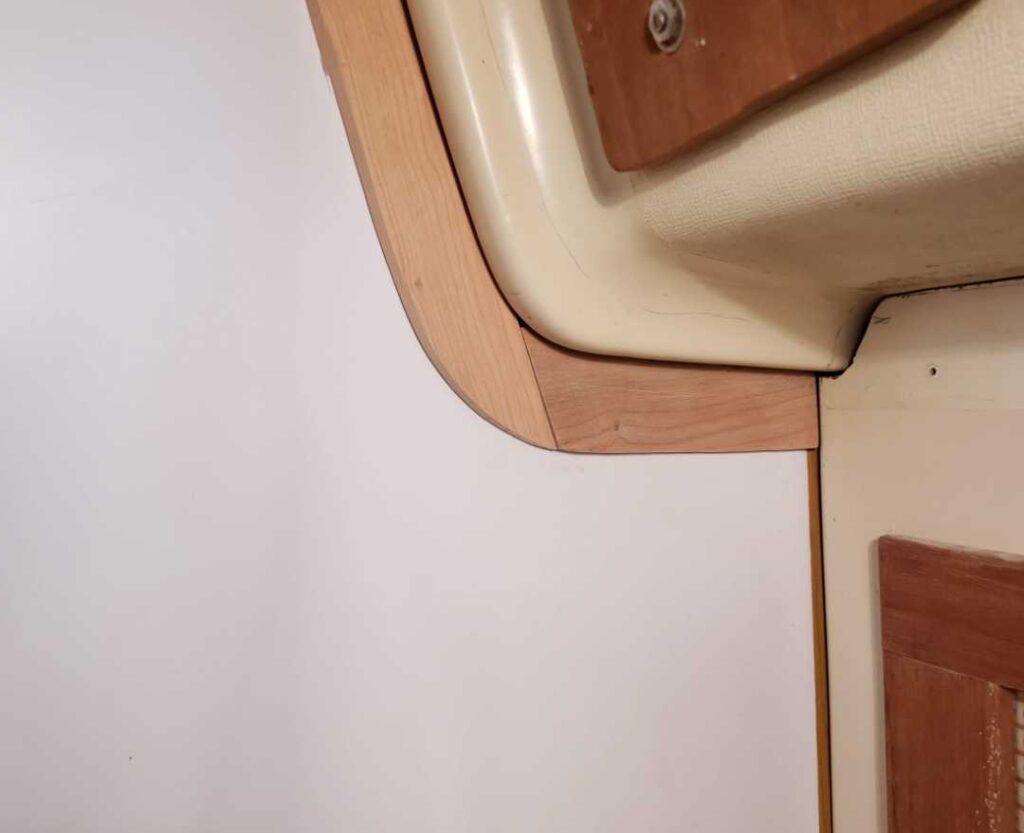
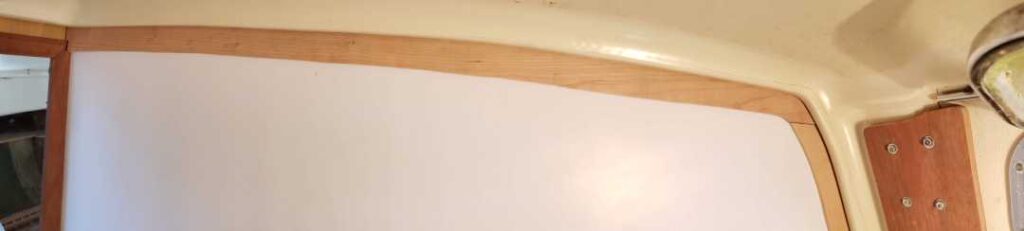
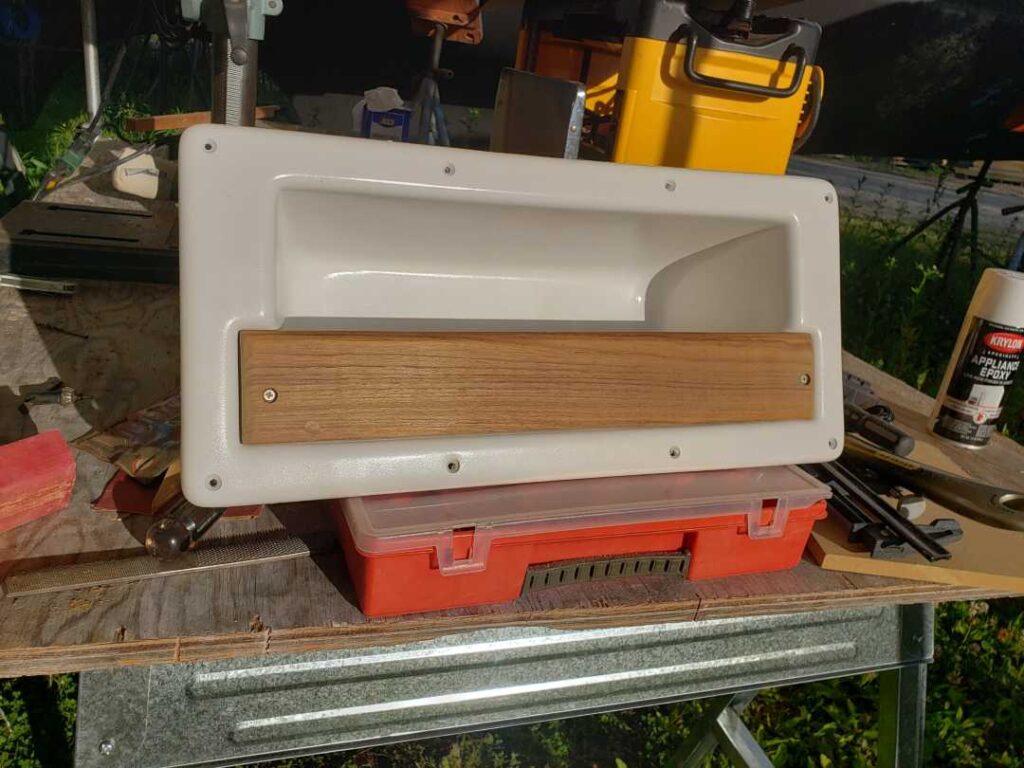
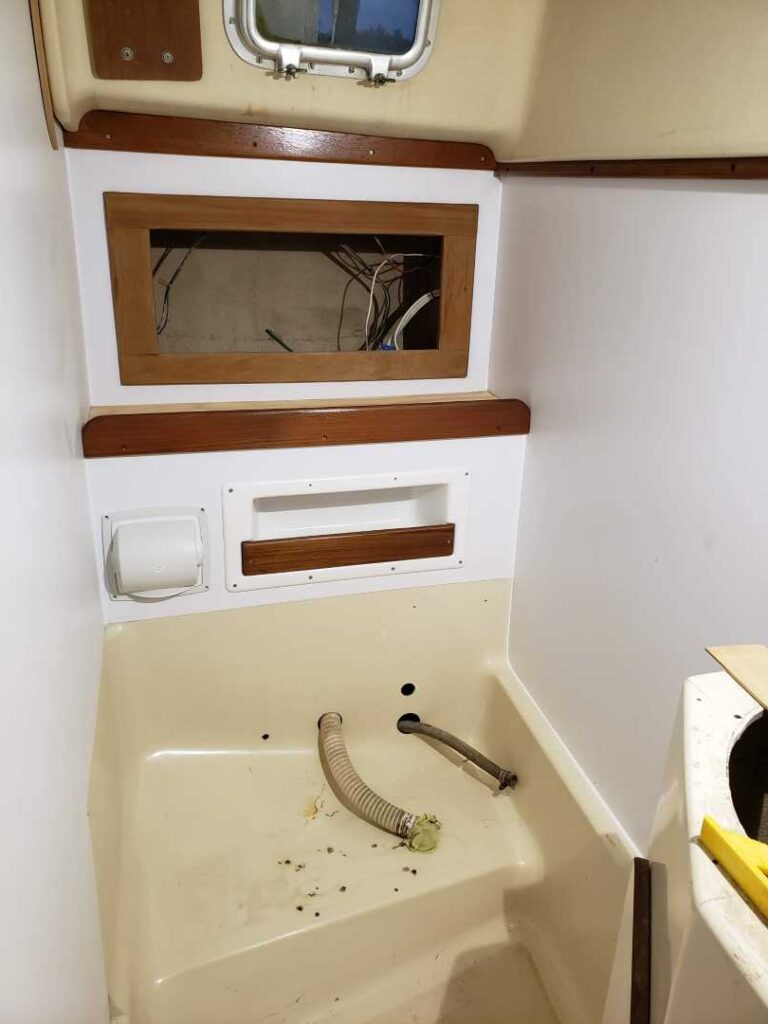
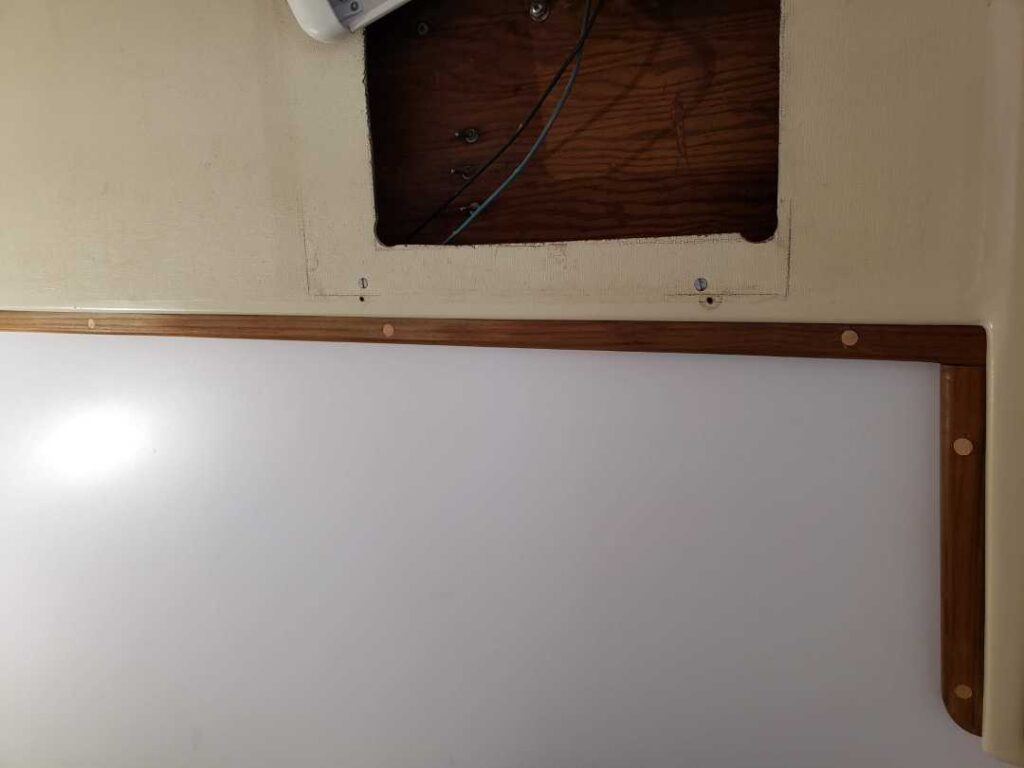
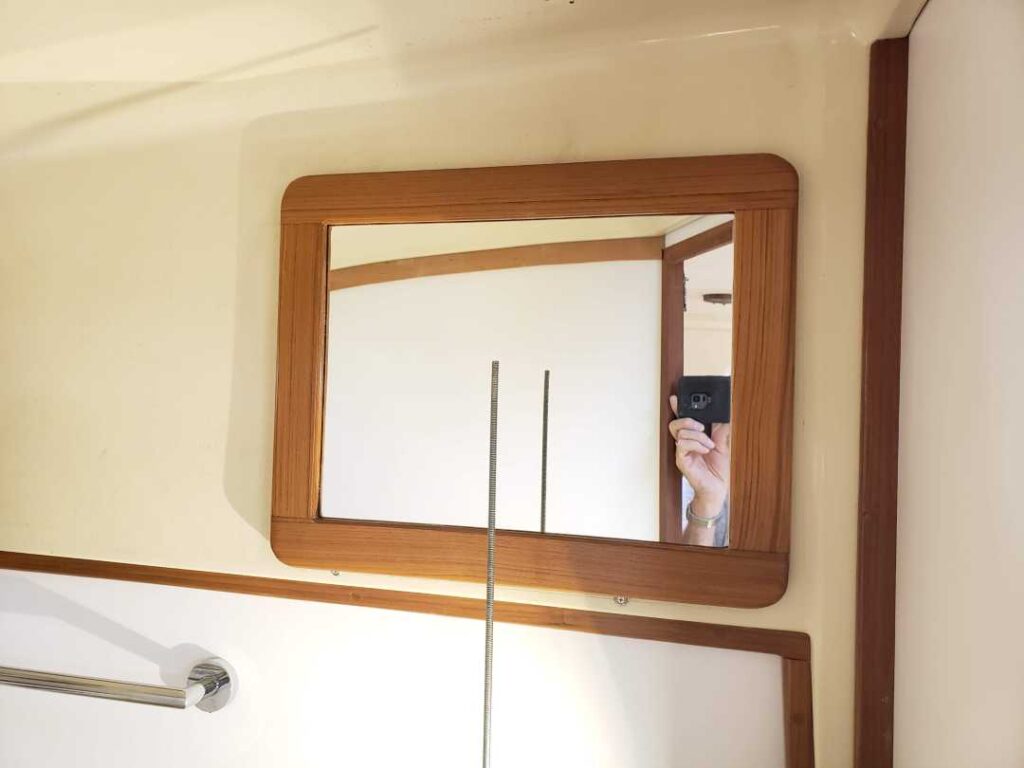
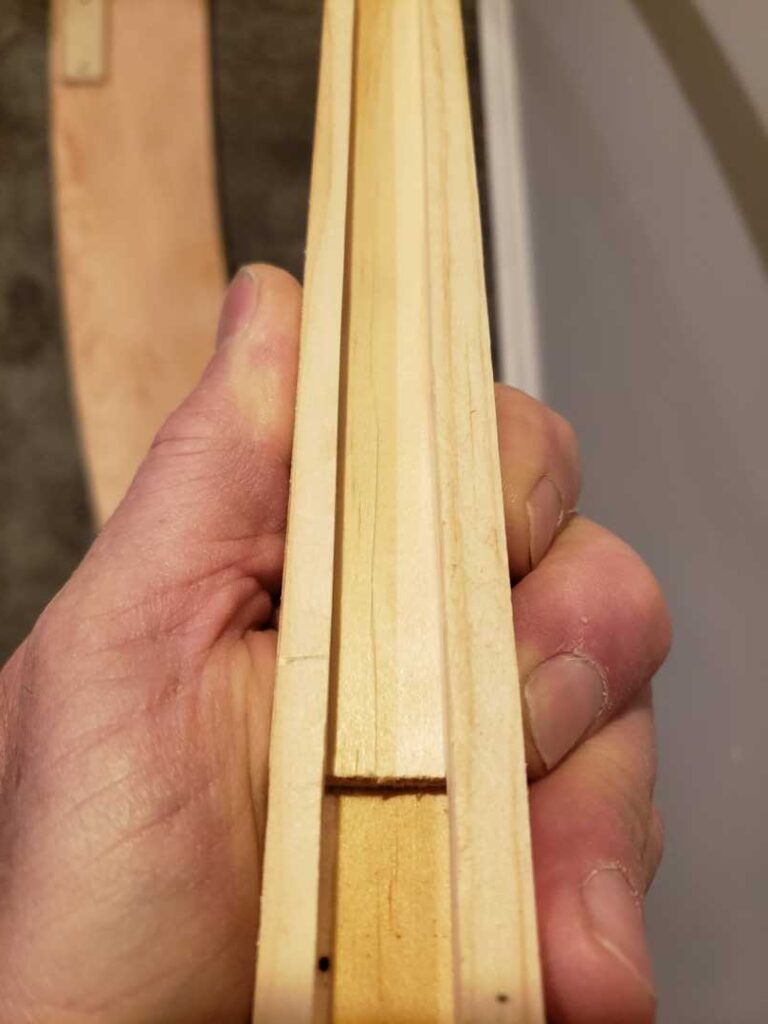
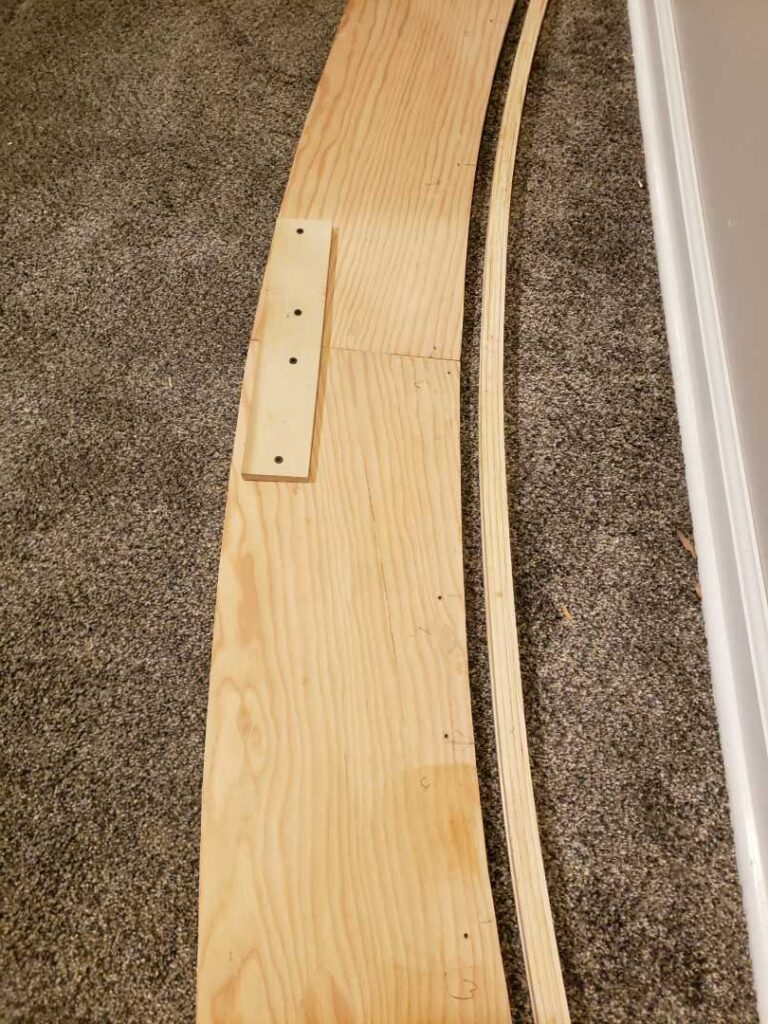
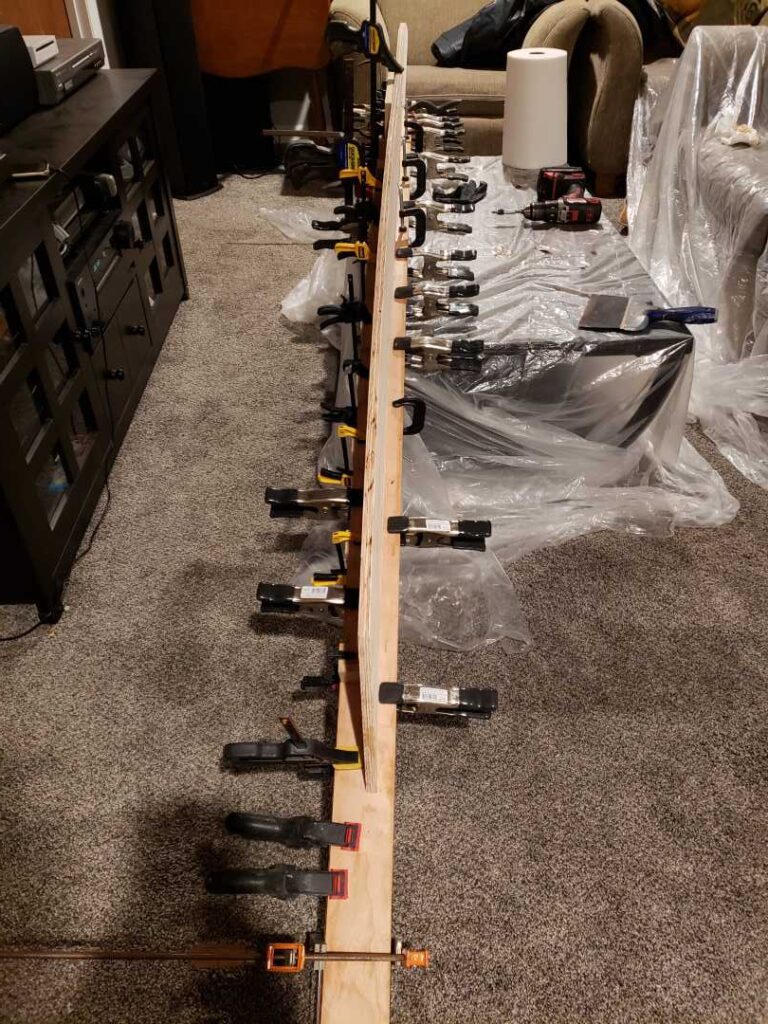
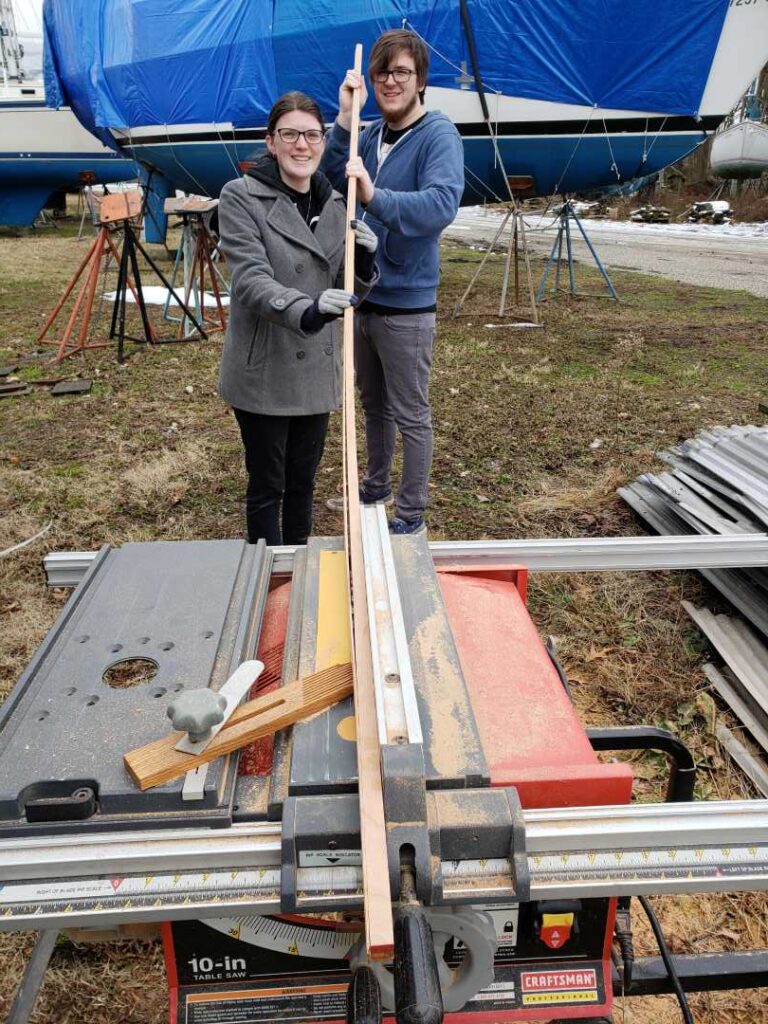
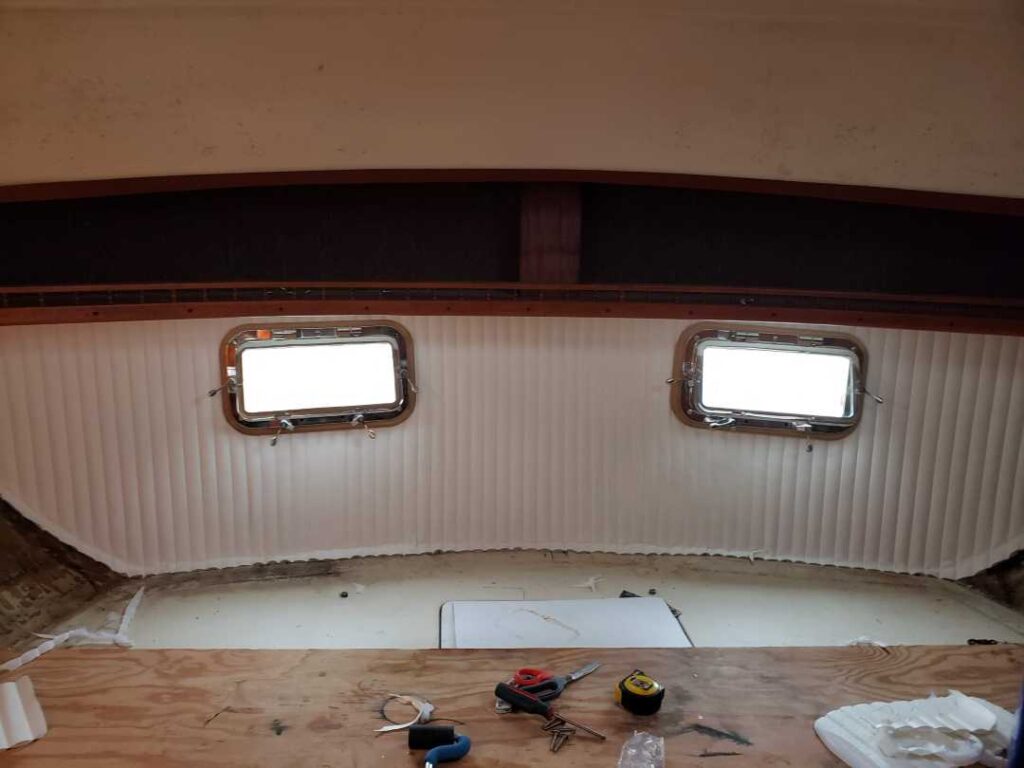
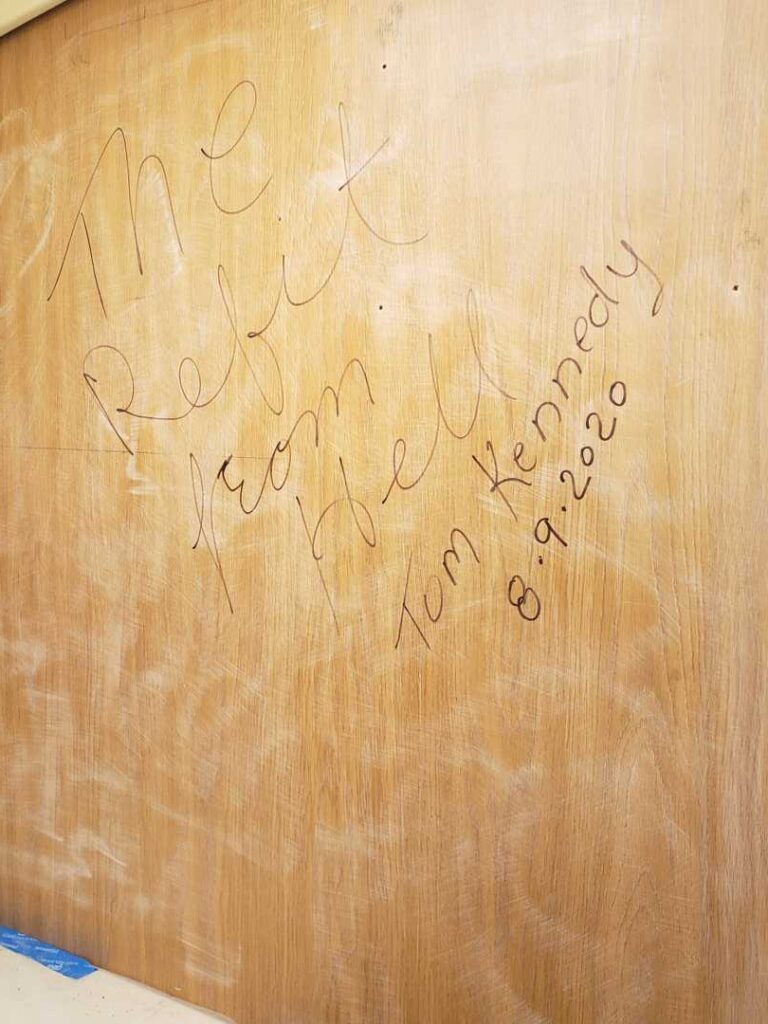
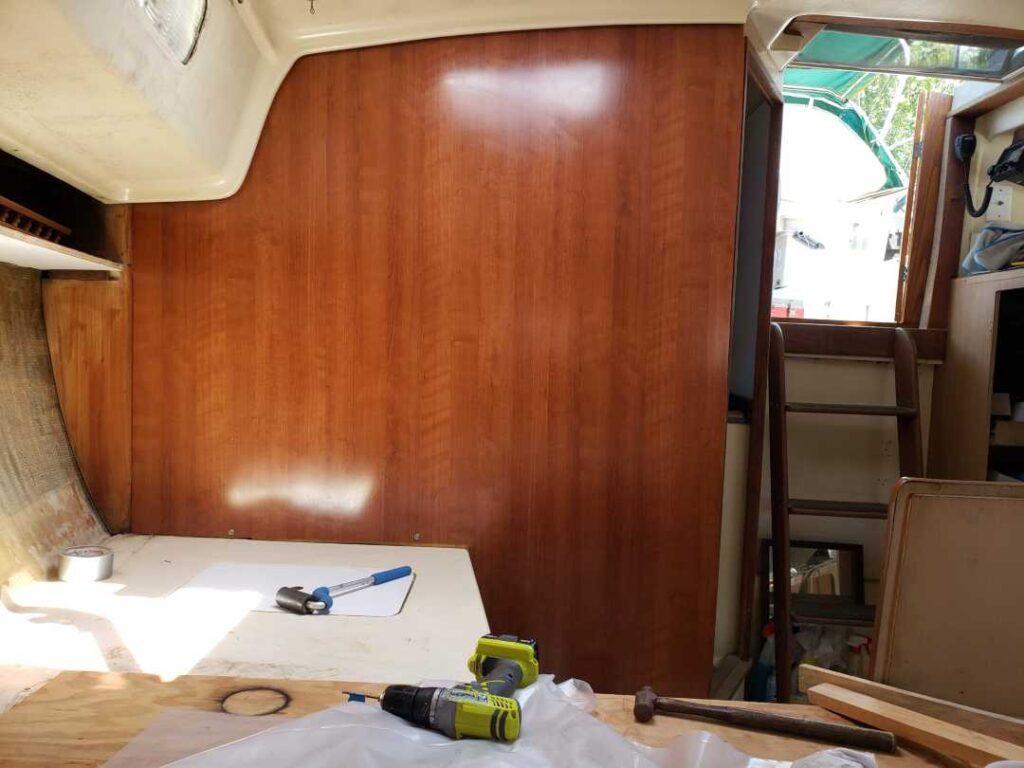
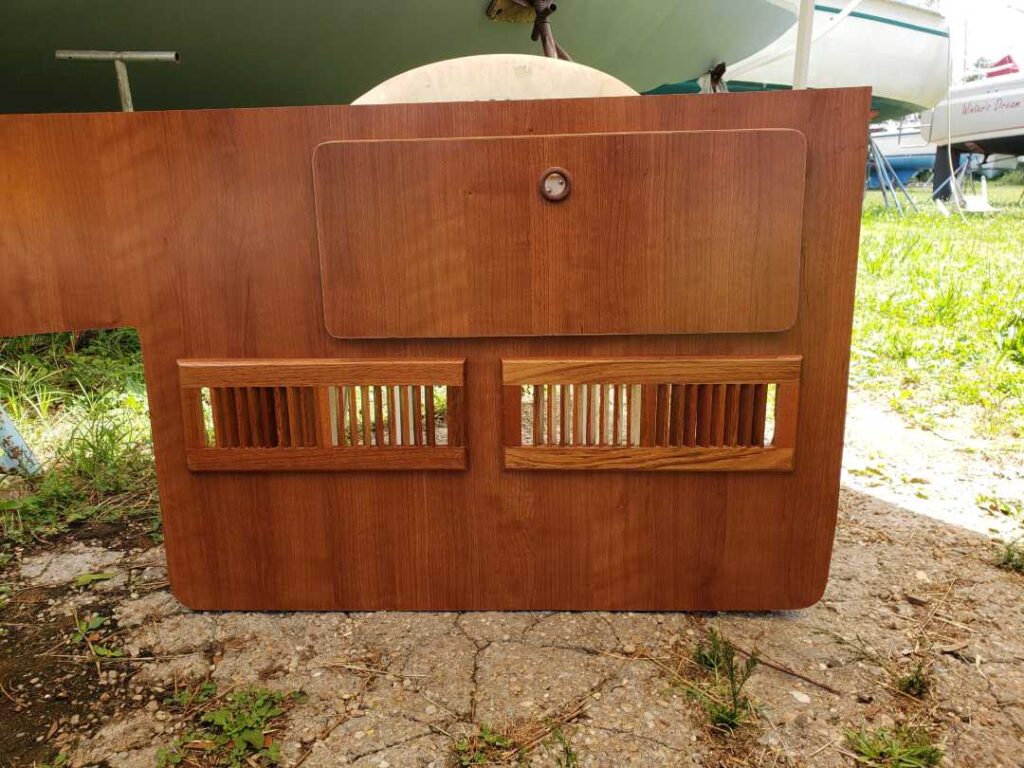
The aft head was a challenge. Re-laminating the space required making templates from lattice wood, then transferring the template to the 60” wide laminate on deck. Then rolling the laminate to get it into the boat and fitting it once inside. Many trimmings and reworks until it finally fit without breaking it. Next, the commercial contact cement was unforgiving. As soon as the two surfaces touched, you were done. On one attempt, the perfectly fit laminate hit the glue, even with PVC tubing to keep them apart, and it was off by a quarter inch. It took three hours to remove it and start over. Eventually, I got it done with the help of my good friend Bob Gloyd. This is the only area of the entire re-laminating that I had to add wood trim.